21 October 2026
Will My Thesis Pass? The Submission-Readiness Checklist
"Will my thesis pass?" is rarely the question you need answered. Outright failure is uncommon, and very few theses fail because the writing was mediocre.
When a thesis does fail, the cause is usually specific: it does not answer its own question, the method cannot support the conclusions, or something formal went wrong (a missed deadline, a missing declaration, no ethics approval).
The more useful question is: is this as good as the time I have left allows? This checklist is organised by what each item buys you, because what stops a thesis failing and what pushes it to a top grade are different things.
Tick items off as you go; your ticks are saved in this browser. Want just the list? Use the short checklist.
Part 1: The things that make a thesis fail
Work through these first. Each is fixable, and each is much worse if found late.
Clear all eight and you have removed the common causes of failure. Then read your programme's own regulations once, properly.
Part 2: The things that separate a pass from a good grade
Most of the available marks are here, and this is where most students stop because the thesis "is finished".
Part 3: Sources and citations
The full process is in the citation-checking guide; these are the states it should end in.
Part 4: Structure and formalities
Part 5: Language
Part 6: The file and the handover
The last hour is where avoidable disasters happen.
A four-week schedule that works
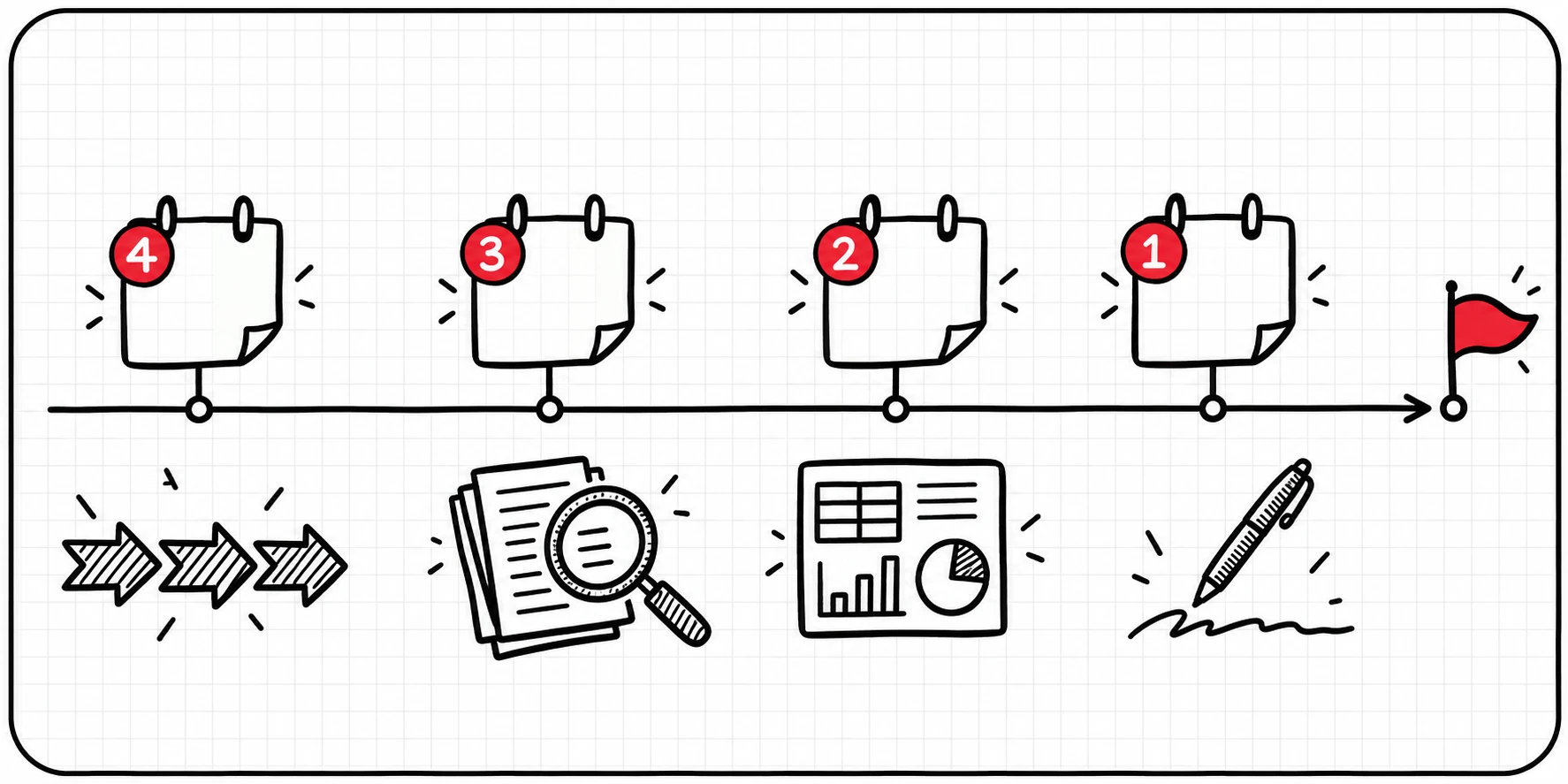
- Week 4: content. Reverse-outline the thesis, fix argument gaps and the introduction–conclusion match, complete your ethics documentation. No formatting yet.
- Week 3: evidence. Verify references, fix the bibliography, back up thin claims, add the counterargument, run your similarity check, book the binding.
- Week 2: structure and formalities. Figures, tables, appendices, cover page, table of contents, style sheet. Write the abstract.
- Week 1: language and admin. Proofread, read once on paper or in a different font, check the PDF, print, bind, and submit a day early.
Then stop. Past a certain point, more editing makes a thesis worse.
If you only have one week
- Days 1–2: Part 1 only. Book the binding today if you need it.
- Day 3: References. Verify anything AI-assisted first, then fix mismatches.
- Day 4: Abstract, cover page, table of contents, figures, tables, appendices.
- Day 5: Proofread the introduction, conclusion and abstract; skim the rest. Check the PDF.
- Day 6: Submit.
A top grade is out of reach from here. Spend the week removing what loses marks.
Using PaperCheck as the second pass
Run your thesis through PaperCheck at the start of week three and most of this list comes back as a prioritised to-do list instead of a vague feeling. A full thesis takes about five minutes.
- What it checks: abstract, argument analysis, consistency, chapter order, logical errors, source density, citation style, gender-inclusive language, term explanation, and bibliography verification.
- What you upload: a PDF or Word file up to about 48,000 words (around 150 pages). Set the type of work, your spelling variant (Swiss Standard German included) and, optionally, a maximum length in pages or words.
Three features matter most at this stage:
- Reference Health sorts every source by what to do next: verified, fix, or check yourself. For fixable entries it shows the wrong field next to a suggested correction.
- Requirements add your department's own rules. Upload the guideline file (PDF, Word or Excel) to generate them, or type them in. Plus allows 18, Ultimate 45.
- The plagiarism check (Plus and Ultimate) shows your similarity report while a missing quotation mark is still a two-minute fix.
Leave time to act on the results, and budget credits for two runs: one to find issues, one to confirm the fixes.
The short version
Passing means answering your own question, matching claims to method, having your ethics paperwork in order, and meeting the formal requirements. A good grade means an argument that builds, an answered counterargument, a working abstract, and claims the right size. Both are much easier with four weeks than with four days.
Not sure where your thesis stands? Upload it to PaperCheck for feedback across argumentation, structure, citations and formal requirements, with a prioritised to-do list for the time you have left.