29 October 2026
Thesis Defense Questions: What Examiners Ask and How to Answer
You have handed in the thesis, and now there is a date when people who read it ask you about it. Most people find this harder than the writing, and most of the anxiety comes from one thing: you do not know the questions, so you cannot tell whether you are ready.
That is fixable. Defense questions are more predictable than they feel. Preparing is mostly knowing which kinds exist and having said your answers out loud once.
Know the format before you prepare for it
Formats differ enough that preparing for the wrong one is a real risk: a short presentation plus questions, a discussion with no presentation, a public colloquium, or a closed exam with two examiners.
The field shapes the questions too:
- STEM: technical probing of methods, data and statistical choices. You may be asked to justify a model, reproduce a result or explain a boundary condition.
- Humanities and social sciences: more open discussion of how your argument engages a tradition, whether your sources support the interpretation, and where the work sits in a debate.
Find out, specifically:
- How long you present, and whether slides are expected
- Who is in the room, and whether anyone is external
- Whether it is public
- How long the questions run
- Whether the defense is graded separately, and with what weight
- Whether you may bring a printed thesis and notes
Ask your supervisor and someone who defended in your department last year. Departmental habits are rarely written down.
What is actually being tested
Not whether you can recall your thesis; your examiners have it in front of them. They are testing whether the choices were yours and whether you understand their consequences: why this method, what you would change, what your findings do not show.
"My sample was too small to generalise, which is why I framed the contribution as exploratory" beats defending the sample size. Your examiners already see the weaknesses. Naming them first turns a challenge into a conversation between two people who agree.
The six kinds of question you will get
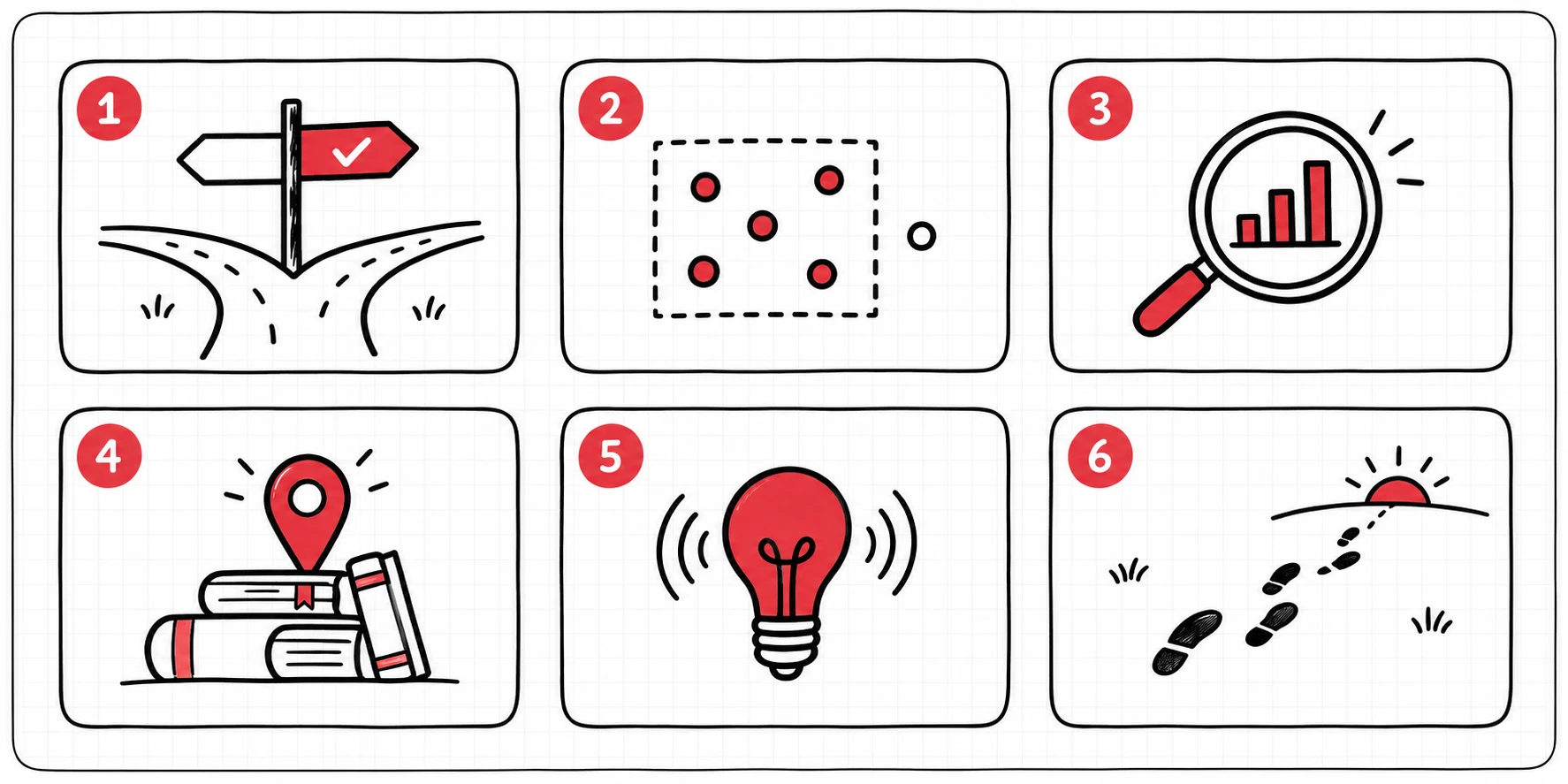
Nearly every question is a variation on one of these. Prepare one solid answer for each and you have covered most of the session.
1. Justify a choice. "Why a qualitative design?" "Why these three cases?" Same shape every time: what you wanted to find out, why the alternative could not deliver it, what you gave up.
2. Defend a boundary. "Why did you not include X?" Every thesis excludes something. Know why (scope, data, time) and say it plainly. "It would have been a different research question" is a legitimate answer.
3. Push on the evidence. "Does your data really support that?" Often it supports a narrower claim. Saying so is not losing; reformulating a claim accurately under pressure is one of the strongest signals you can give.
4. Situate the work. "How does this relate to Author's findings?" Read three recent papers in your area shortly before, especially anything your examiners wrote.
5. So what? "What does this change?" Have a thirty-second and a two-minute version. Practise the short one until it is boring.
6. What next? "What would you do with another year?" Cheap to prepare, and it shows you can see past your own project.
Face your weaknesses before they do
Spend an hour writing down every criticism of your own thesis: small sample, self-report bias, a stretched definition, a source you could not access. All of them.
For each, write two sentences: what the limitation is, and why it does not undo the contribution. That is your answer. Where you cannot write the second sentence, spend your remaining preparation time.
When a criticism lands, use "yes, but":
Agree with the true part, then say what remains standing. Never fight the true part.
What to say when you do not know
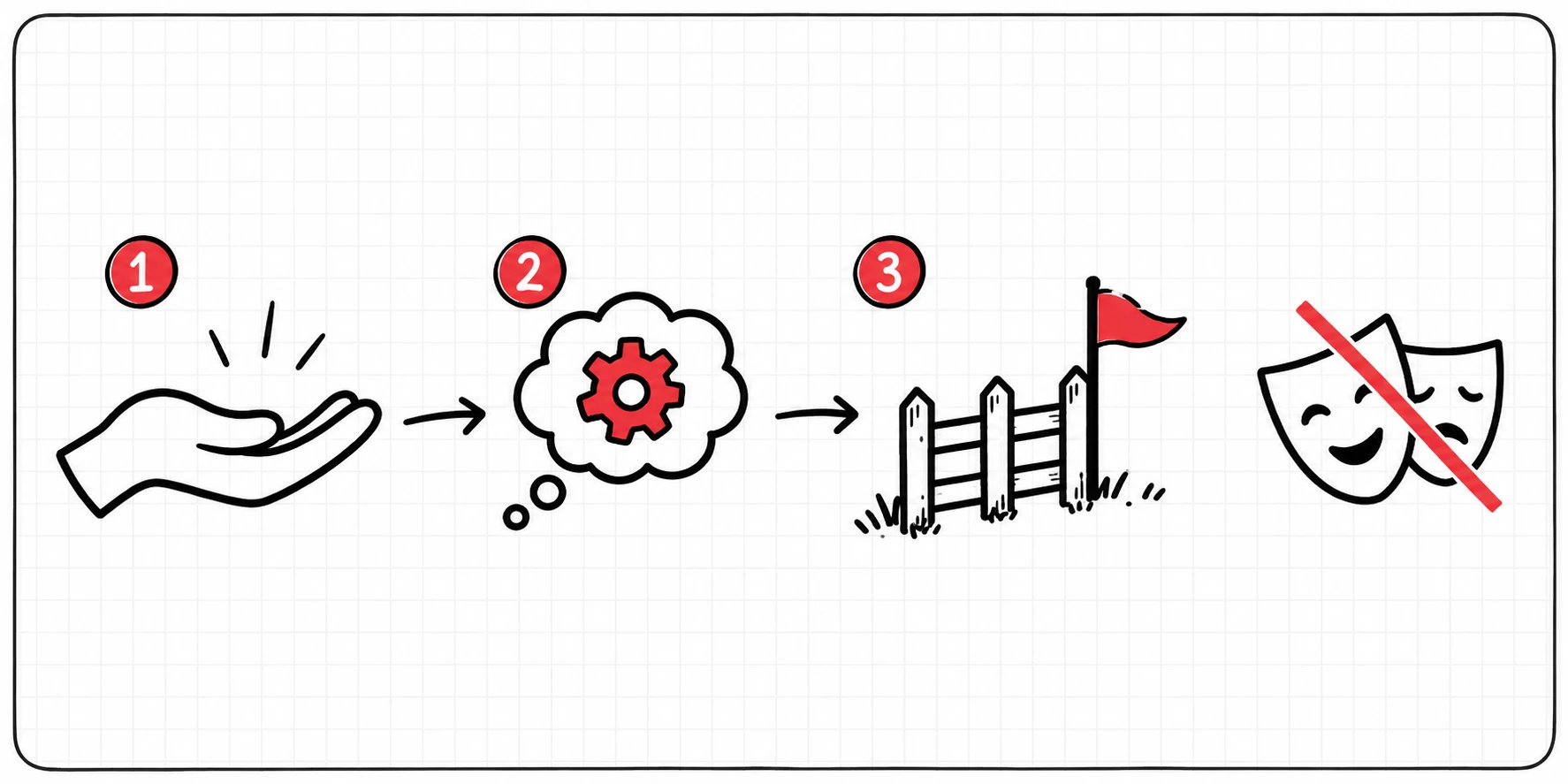
Everyone hits at least one question they cannot answer. What is watched is what you do next, and there is a script:
- Admit it.
- Give your reasoning.
- Mark the limit of what you know.
Examiners do not react badly to the gap; they react badly to bluffing, and they can tell.
Two more lines that are allowed: "Could I come back to that?" and "Can I make sure I understood the question?" The second buys you five seconds and often shows the question was narrower than you feared.
The presentation, if you have one
Keep it simple: the question, why it matters, what you did, what you found, what it means, what it does not show. That last part costs thirty seconds and buys a lot of credibility.
- Rehearse to time, out loud, standing up, at least three times. Silent rehearsal always runs short.
- Slides support you; they are not your notes. If you can read your talk off them, there is too much on them.
- Be able to explain every figure in one sentence, axes included.
- Prepare three or four backup slides for questions you know are coming: the sample table, method detail, the robustness check.
- Bring the printed thesis, tabbed at your tables. Looking something up is fine.
Managing time in the room
- Aim for two to three minutes per answer. If a question needs more, say so: "This one needs a longer answer. Is it all right if I take a moment?"
- Stop when you see slow nodding or glances at notes. You have made your point.
- Answer the question asked. Give one sentence of context at most, not a re-explanation of your thesis.
- Notice where the questions cluster. If three of the first four are about methodology, that is where the concern sits.
- Name a major point before time runs out: "I want to flag one thing before we run out of time…"
Nerves and the room
Some nerves are useful and do not mean you are underprepared. What helps:
- Rehearse out loud with another person in the room. Speaking to a live audience can only be practised live.
- Visit the room, or test the video call, beforehand. Removing small unknowns removes a lot of tension.
- Slow down on purpose. A pause before answering reads as thoughtful, never as slow.
- Take water. A sip is a legitimate three-second thinking pause.
- Sleep beats one more read-through. Late revision the night before makes you less flexible, not more.
How to practise
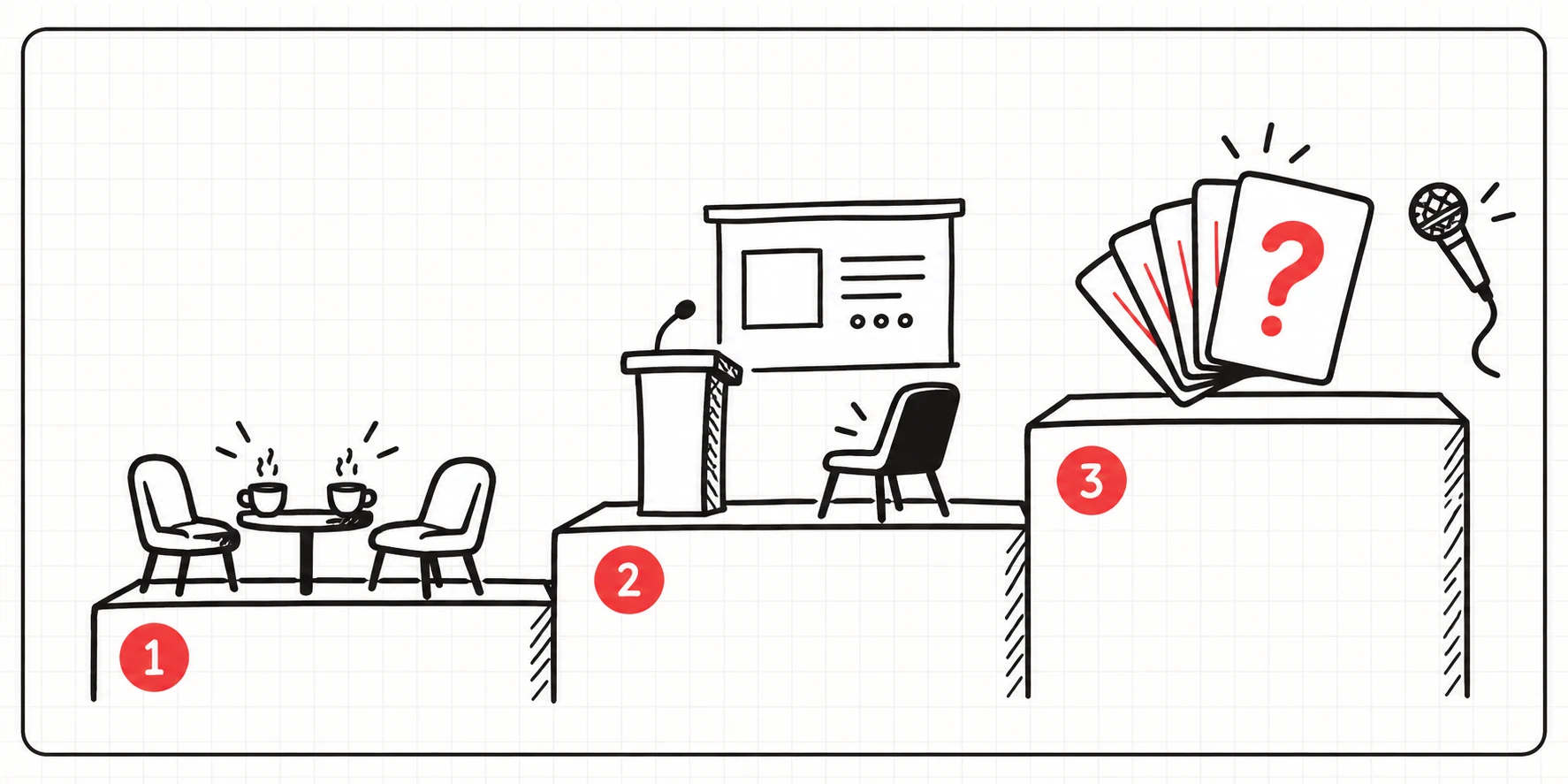
Reading your predicted questions is not practice. Saying the answers out loud is. Three ways, from least to most realistic:
- Explain your thesis to someone outside your field. If they cannot follow, the gap is your understanding. The places where you lean on jargon are exactly where an examiner will probe.
- Run a mock defense with a peer who has read your work. Give them the six question types and ask them to interrupt and push back. Stand up, use your slides, keep to time. Afterwards ask what was unclear and which answers sounded rehearsed.
- Answer questions you have not seen. It trains the one skill reading cannot: thinking on your feet about your own work. With no one available, write questions on cards, shuffle, and draw at random.
Record yourself. Audio is enough. Listen for filler words, answers that drift, and moments your voice dropped into uncertainty you did not feel. It is uncomfortable, and cheaper to hear now than in the room.
Repeat the mock defense at least twice, a few days apart. One mock defense reveals problems; the second starts fixing them.
Practising with PaperCheck
Unseen questions are the hardest part to arrange, and that is where PaperCheck's Defense Studio helps. It reads your actual document and predicts likely questions: methodological weak points, gaps against the literature, definitions that need sharpening, not a generic list that fits nobody's project.
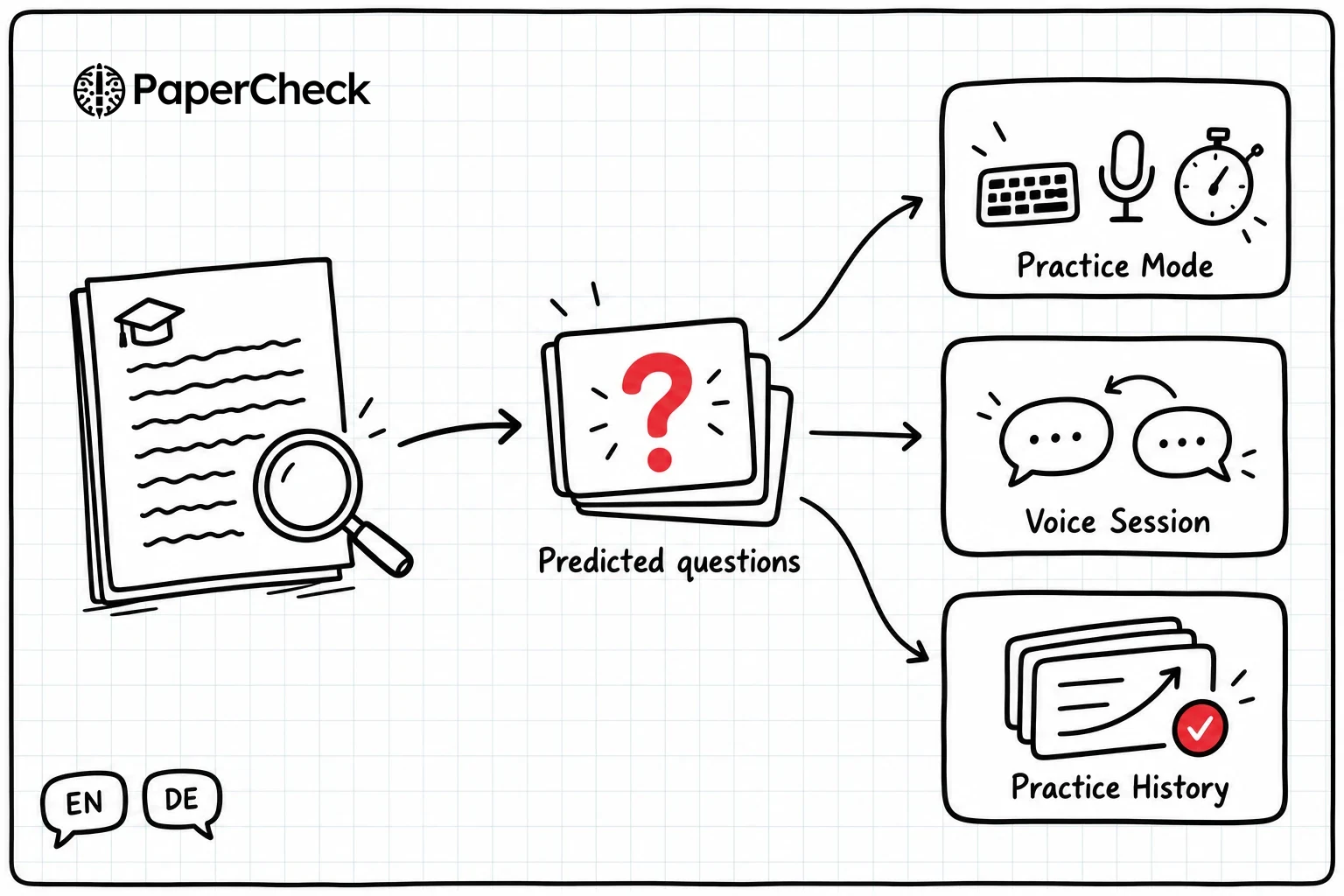
- Practice Mode: answer each question by typing or recording yourself (up to five minutes per answer), then get feedback on where the answer was strong, where it was vague, and where you should have used evidence from your own paper.
- Voice Session: a live spoken session that asks unscripted follow-up questions based on what you just said. It is the closest you can get to a real panel's unpredictability on your own, at eleven at night.
- Practice History: keeps every session, so you can reread earlier answers and the feedback and see what improved.
You can practise in English or German. Defense Studio is on the Plus and Ultimate plans, and the voice session costs one credit per completed minute, charged separately from your paper analysis, so plan a few focused sessions rather than leaving it running.
It does not replace a mock defense with people who know your field. It means you arrive at that mock defense having already said your answers out loud once, a much better use of your supervisor's hour.
The week before
After the defense
The most common outcome is not a simple pass or fail but a pass with conditions: corrections to make before the thesis is final, from minor (fix a reference) to major (rerun an analysis). Before you leave the room, or in the days after, ask exactly what needs to change, by when, and who signs off.
- Minor corrections are normal, not a punishment. Almost every thesis gets them.
- You usually have weeks, not days. Find the deadline and work backwards.
- Keep a record of what you changed and why. You will need it for a "response to examiners" document, and it protects you if questions come up later.
- For major corrections, agree a plan with your supervisor first. It is less likely to come back for a second round.
- You are a candidate until the corrections are accepted. Check what your institution needs for final submission.
Want to know what you will be asked before you walk in? Upload your thesis to PaperCheck for defense questions generated from your own document, plus spoken practice with follow-up questions in Defense Studio.