17 October 2026
Is My Argument Logically Sound? How to Check the Reasoning in Your Thesis
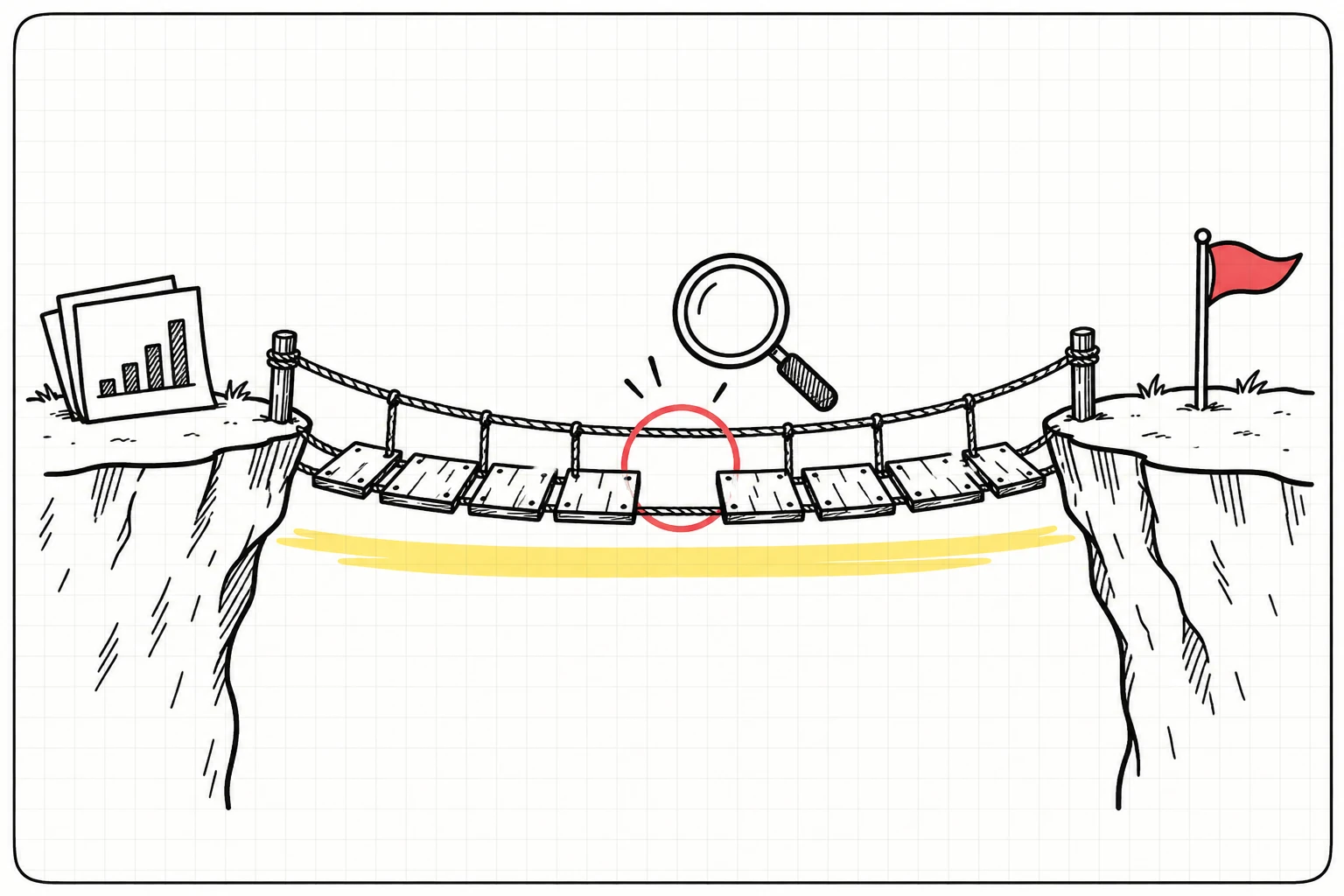
You can write a thesis in flawless prose, cite eighty real sources, and still get a mediocre grade because the argument does not hold. Grammar and citation problems are visible. Reasoning problems are not: the sentence with the logical gap usually reads perfectly well.
Argumentation is also the heaviest part of most rubrics. In the ones I have seen, "argumentation", "analytical depth" or "critical engagement" carries more weight than any other single criterion, though weightings vary, so read your own. Here is how to check your argument before someone else does.
Every academic claim has three parts
Most people think of an argument as claim plus evidence. There is a third part, and it is where nearly all the problems live. The vocabulary comes from Stephen Toulmin's The Uses of Argument (1958), still the most useful practical model:
- Claim: what you are asserting.
- Evidence (Toulmin calls it grounds or data): the study, data, or source you point at.
- Warrant: the unstated general rule that licenses the step from your evidence to your claim.
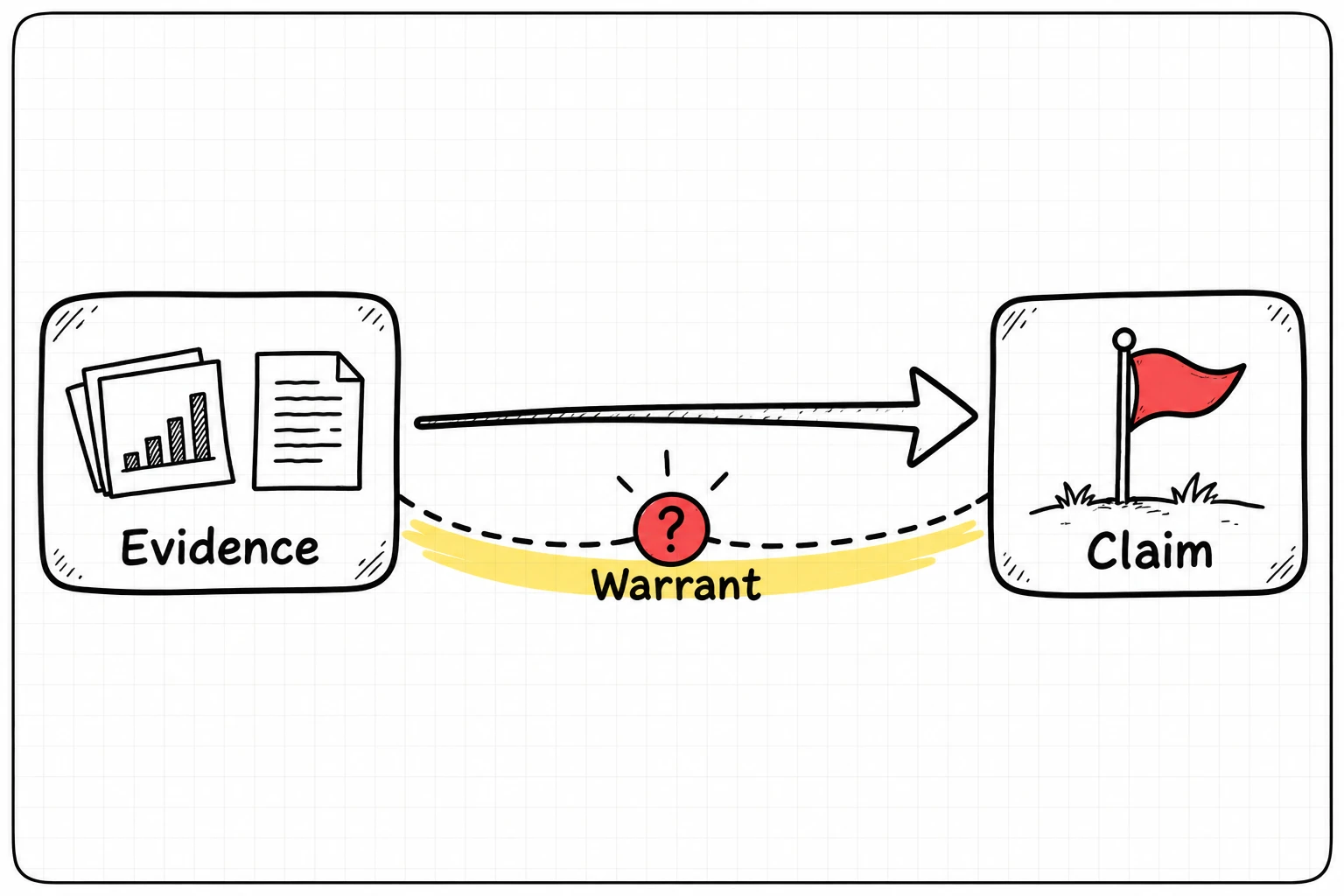
The warrant is almost never written down, so it goes unexamined. In a defence, your examiner's job is to say it out loud and ask whether you believe it.
A worked example of argument analysis
Here is a paragraph of the kind that appears in many management theses. The survey is invented (a composite, not a real study), but the studies I use against it are real.
It reads fine. Now break it apart:
- Claim: remote work increases productivity.
- Evidence: 78% of surveyed employees reported feeling more productive.
- Warrant (unstated): how productive employees feel is a valid measure of how productive they are.
That warrant does enormous work, and the literature contradicts it:
- A study of more than 10,000 IT professionals in the Journal of Political Economy Microeconomics found that hours worked rose while output did not, a net productivity decline of 8–19%, at a time when satisfaction with remote work was generally high.
- A systematic review concludes that the effect depends heavily on the nature of the work, the industry, and home conditions, so no single-site survey settles it.
The moment you write the warrant down, the paragraph stops being persuasive. And there are four more problems underneath it:
1. The sample does not support the generalisation. One company, one sector, one country, but the claim is about employees and companies in general. Software engineers are close to the best case for remote work; the finding says almost nothing about laboratory technicians.
2. The timing is invisible. In 2021, the alternative to working from home was not a normal office. That needs to be controlled for or acknowledged.
3. "78% of respondents" is not "78% of employees". Who did not answer, and why? People who dislike remote work are less likely to fill in a remote-work survey.
4. "Should therefore" is a jump. Everything before it describes; the conclusion recommends. A recommendation needs premises the paragraph does not have: costs, staff who want an office, what the company is optimising for.
The same paragraph, repaired
The second version makes a smaller claim, and it is far harder to attack. That is the trade every strong thesis makes: examiners do not reward big claims, they reward claims that survive being pushed on.
Eight patterns to search your own draft for
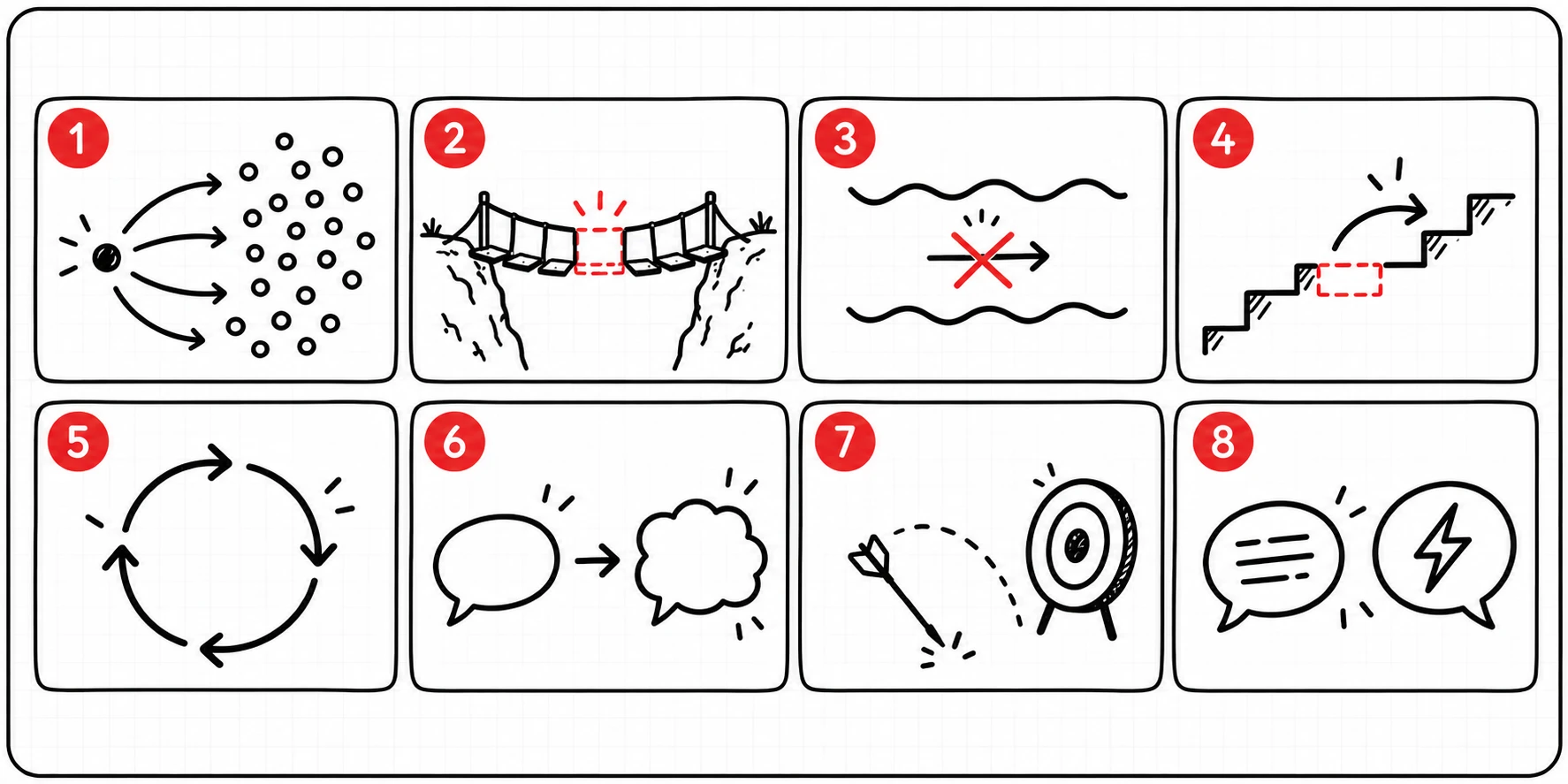
1. Overgeneralisation. Evidence from one context, claim about all contexts. Search for "this shows that" and "this proves", and for claims whose subject is broader than your sample.
2. Missing warrant. Write the unstated assumption under each key paragraph. If you cannot write it, or writing it makes you uncomfortable, the paragraph needs work.
3. Correlation stated as cause. Search for "leads to", "results in", "drives" and "because of" on observational data. Add the causal identification your design supports, or downgrade to "is associated with".
4. The is–ought jump. A descriptive finding followed directly by a recommendation. Every "should" needs a premise about values or objectives nearby.
5. Circular support. Your conclusion restated as its own reason. Common in the discussion chapter, where the argument loops back to the introduction.
6. Shifting definitions. One term, different meanings in different chapters. In the example above, "productivity" is a feeling in the evidence and an output rate in the claim. Search your three or four key terms through the whole document and check each use matches your definition.
7. A conclusion that misses the research question. Put the question and your concluding paragraph side by side. Theses drift over a year, and answering a slightly different question is one of the most common things examiners raise. Bring the conclusion back, or rewrite the question and update the introduction and methodology to match.
8. No counterargument. If nothing in your literature review contradicts you, you have probably filtered your reading. Find the strongest published objection and answer it. This is the fastest way to move from a good grade to a top one.
Hedging: precise, not timid
Once you start shrinking claims to fit the evidence, the usual overcorrection is to hedge everything into mush. Examiners read the difference as a difference in competence.
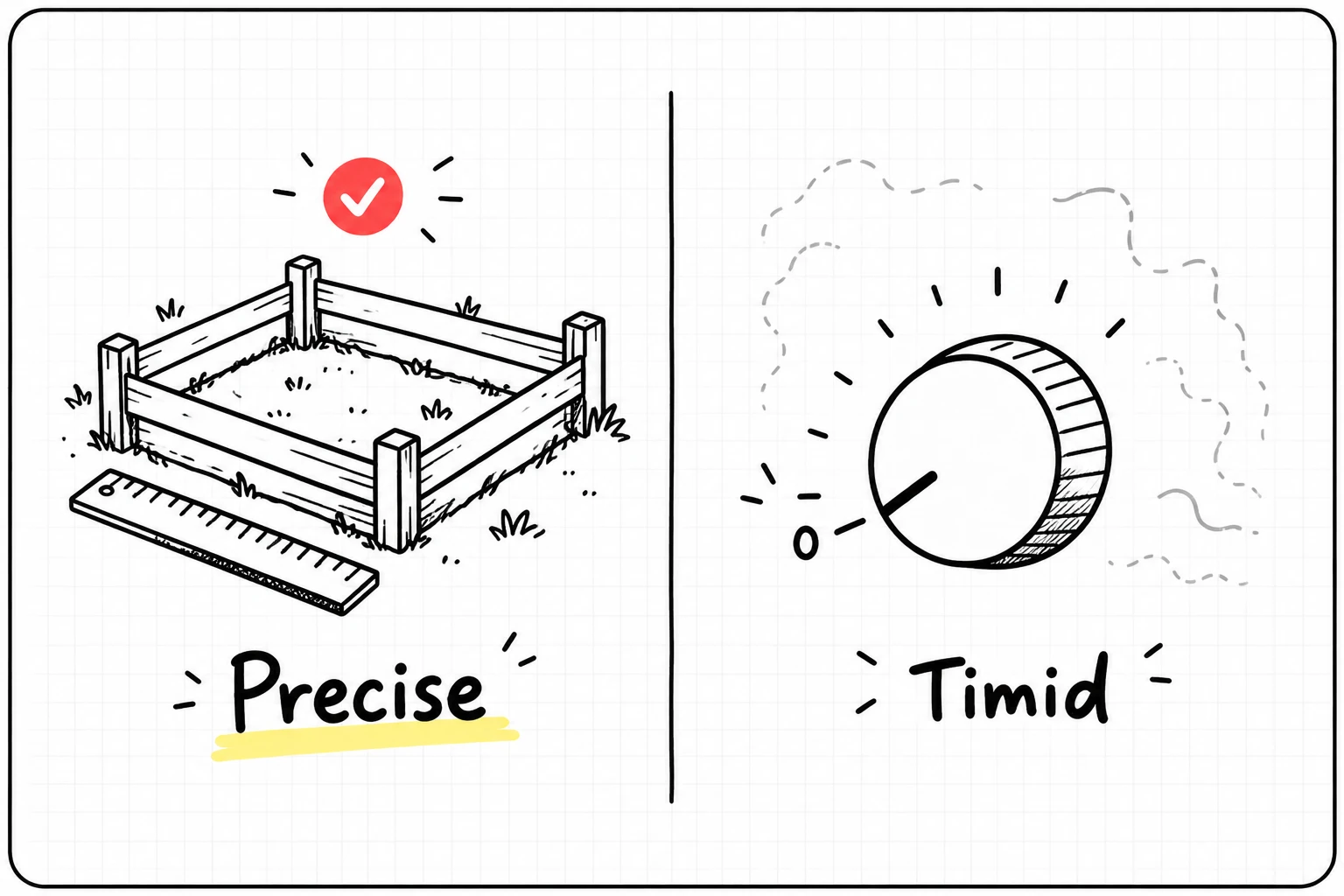
- A precise hedge names the boundary of the claim: "in knowledge-work settings", "among the firms in this sample", "over the period observed". Each tells the reader how far the finding travels, and each can be defended.
- A timid hedge only lowers the volume: "It could be argued that remote work may perhaps have some influence on productivity" commits to nothing. If a sentence stacks two or more of "may", "might", "possibly", "seems to" or "it could be argued", cut it back to one.
The test: delete the hedge. If the sentence loses accuracy, keep it. If it only loses caution, the hedge was doing no work.
Auditing your own draft
- Reverse-outline it. Write one sentence per paragraph stating what it claims, not what it is about. Read the claims alone: empty paragraphs and broken jumps become obvious.
- Read your topic sentences in sequence. They should form an argument on their own. If they read as a list of subjects, your structure is descriptive, the most common reason for "insufficient critical depth" in feedback.
- Play examiner. For each main claim, write the strongest objection and whether the thesis answers it. If it does not, add a limitation or shrink the claim.
- Get one outside reader. Not a friend from your programme who shares your assumptions; someone who will ask why a step follows.
What PaperCheck checks
Reasoning is harder to automate than spelling, so here is exactly what you get. Several checks look at your argument from different angles:
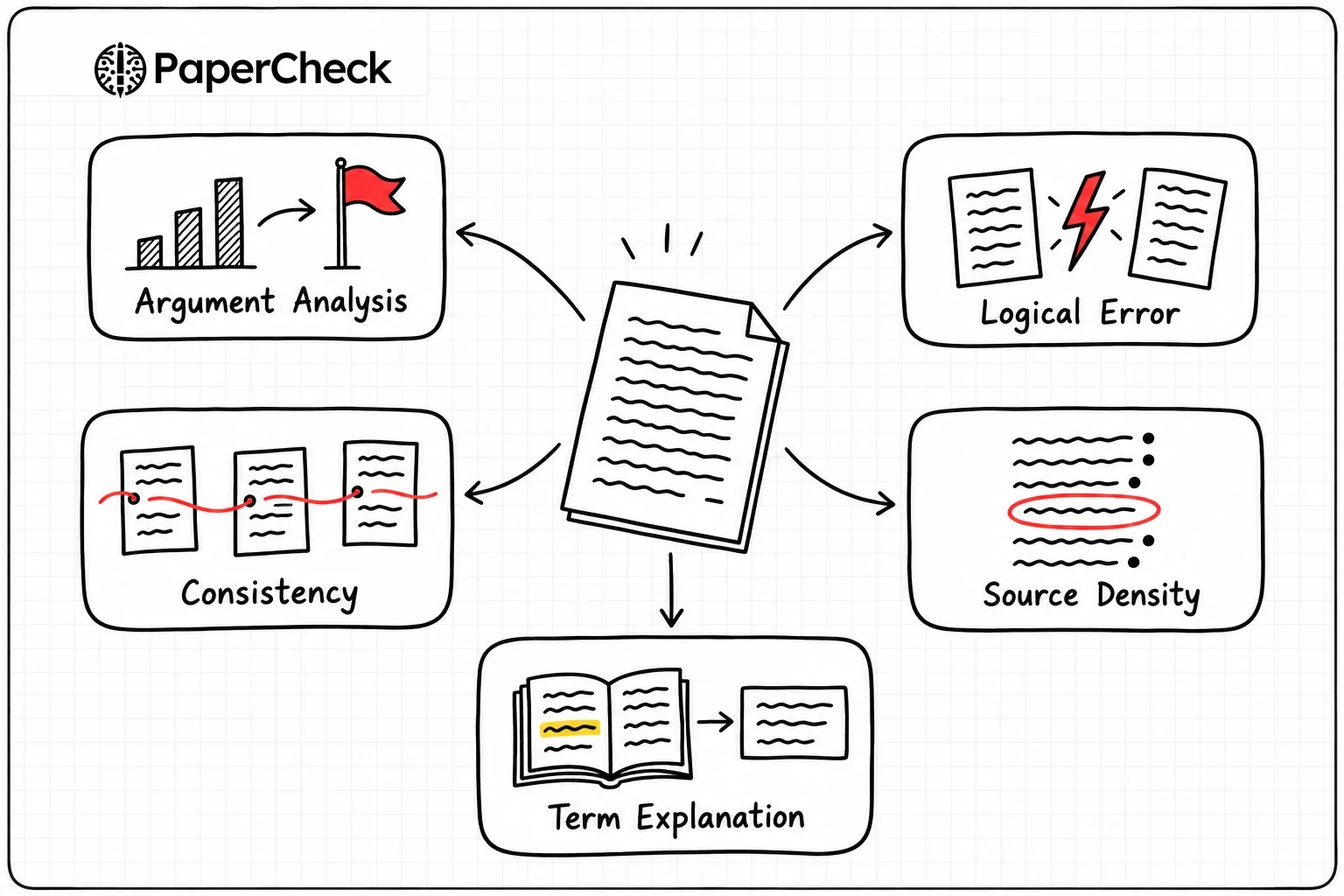
- Argument Analysis: are your claims supported and convincingly structured?
- Logical Error: contradictions and unclear points, including two chapters that state incompatible things.
- Consistency: does the logical flow hold from introduction to conclusion?
- Source Density: passages that claim more than their sources support, often the first sign of a missing warrant.
- Term Explanation: are key terms introduced and explained where they first appear? That is where shifting definitions usually start.
Each finding comes with the sentence it refers to, what is wrong, and a suggested rewrite, shown on the page where it occurs. Findings also collect into a prioritised to-do list, structure at the top and spelling at the bottom.
Treat the output as places to look, not a verdict. A flagged paragraph is not automatically wrong, and a clean one is not automatically sound. What the tool does well is find the spots in a 15,000-word draft that deserve a second read, which you can no longer do yourself after months inside it.
The short version
Sound reasoning means claims the right size for your evidence, and saying out loud the assumption that connects them. Before you submit:
- reverse-outline your draft
- write your warrants in the margin
- check your key terms keep one meaning
- answer your strongest critic
- let an outside reader (human or otherwise) find the step you thought was obvious
Want a second read on your argumentation? Upload your thesis to PaperCheck for feedback on argument structure, logical consistency, and coherence, plus the defence questions your examiners are most likely to ask.