13 October 2026
How to Check Your Thesis Citations Before You Submit
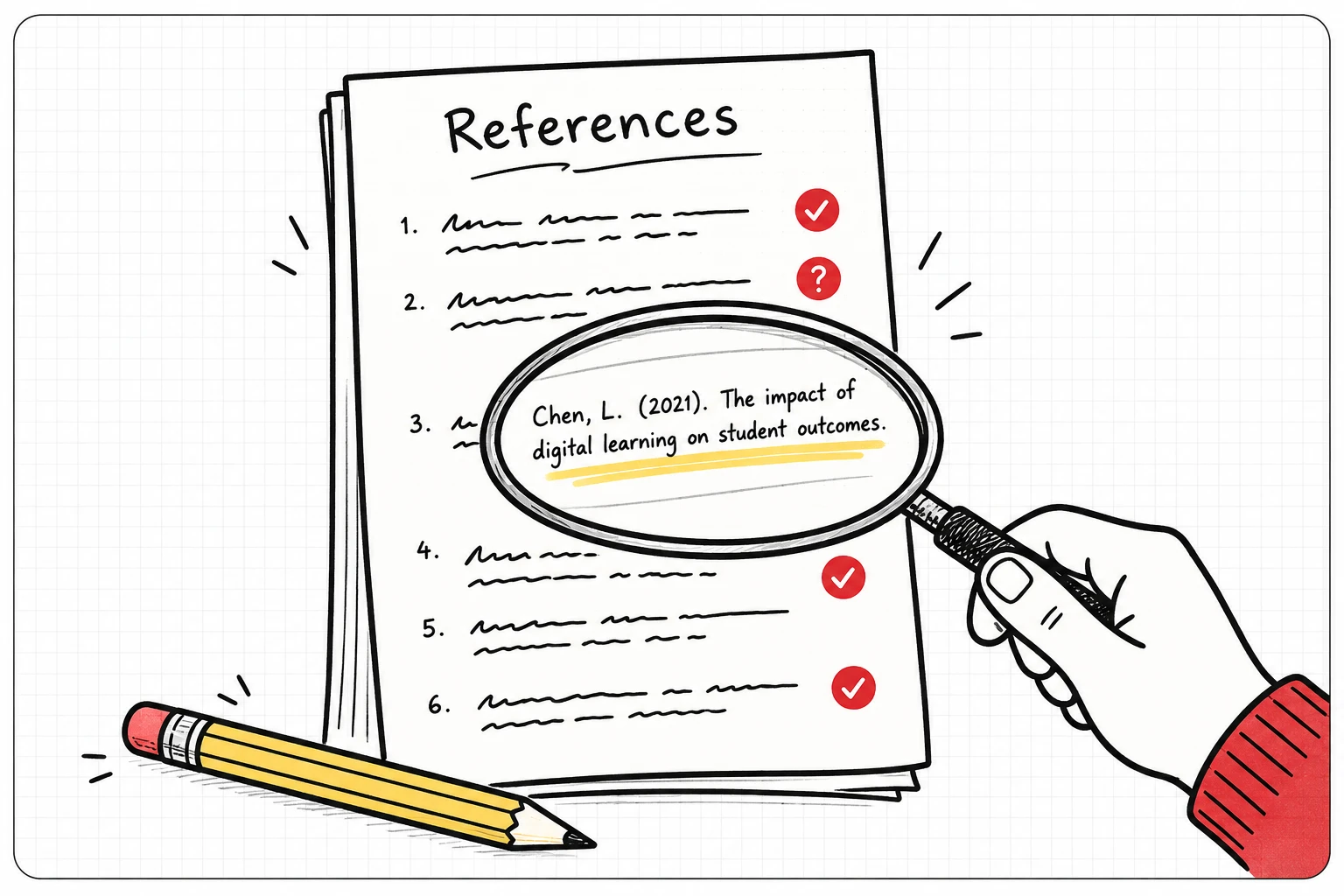
Nobody fails a thesis because of one misplaced comma in a reference. But almost everybody loses marks somewhere in the bibliography, and it is the most avoidable kind of loss there is. Your citations are the one part of the document where "correct" is fully defined in advance. The argument is a judgement call. The reference list is not.
Checking thesis citations by hand is tedious, so most people do it at 2am before submission, exactly when they are least likely to spot a missing page number. This guide gives you a faster order: the costly errors first, the cosmetic ones last, and a plan for sources that will not turn up.
What examiners actually look at
In my experience, examiners do not read a bibliography line by line. They spot-check: they pick three or four references they already know, see whether each entry is right, then check that the sources in a key paragraph appear in the list. Your supervisor may work differently, so ask, but plan for sampling.
That has two consequences:
- Repeated mistakes get caught. If errors are found by sampling, a consistent small mistake repeated across fifty entries is far more likely to be caught than one odd entry.
- Wrong sources outweigh formatting. A source that does not exist, or that says something different from what you claimed, is a much bigger problem than a formatting slip. It reads as carelessness at best.
So work in this order:
- Does every source exist and say what I say it says?
- Does every in-text citation have a matching bibliography entry, and vice versa?
- Is the citation style applied the same way everywhere?
- Are the small details right: page numbers, DOIs, capitalisation, dates?
The five errors that cost the most
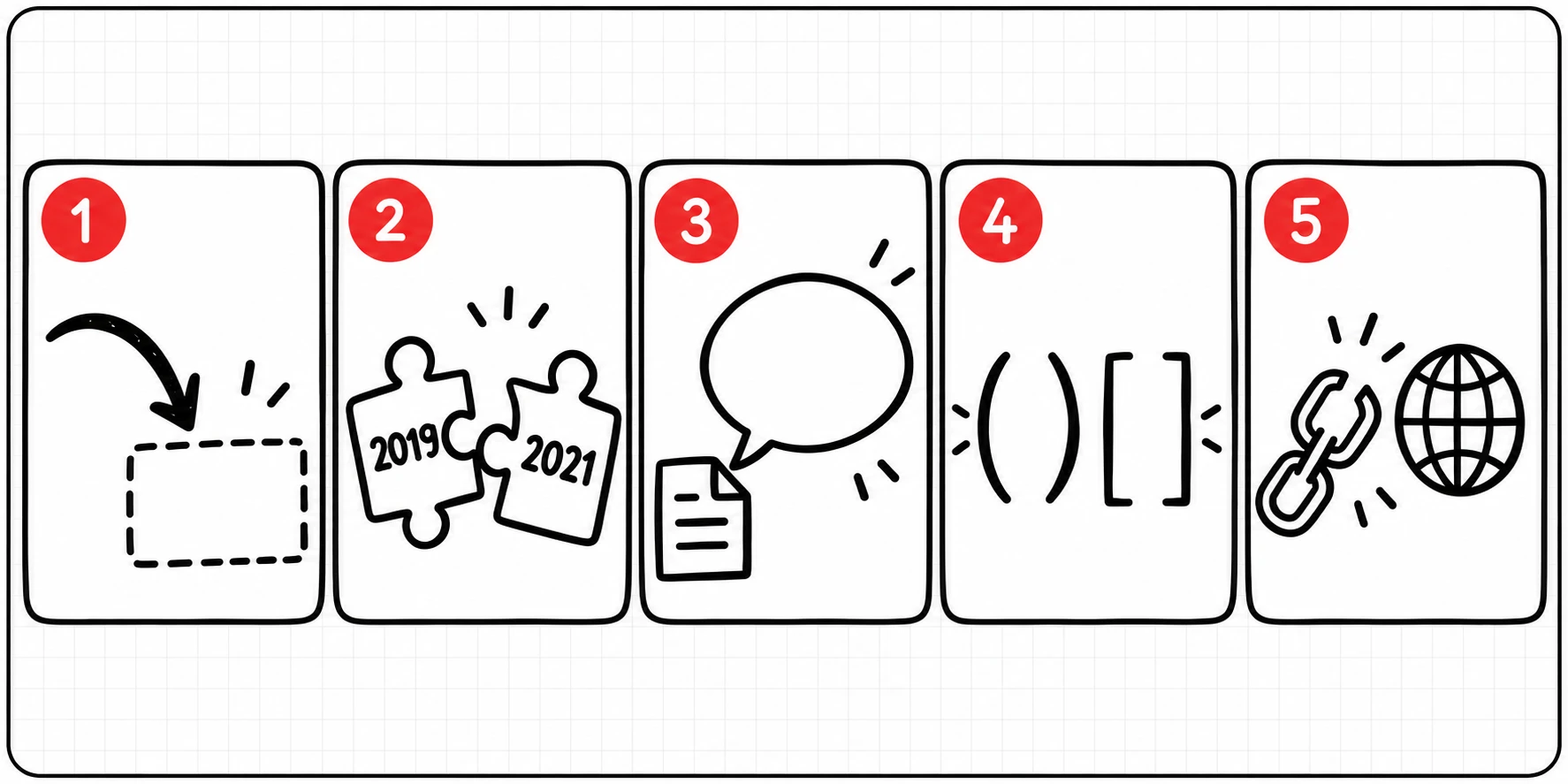
1. Citations that point to nothing. This is no longer a rare accident:
- Researchers checked all 636 citations in ChatGPT-written literature reviews: 55% of the GPT-3.5 references and 18% of the GPT-4 references were entirely fabricated, and many of the real ones carried citation errors.
- A separate test of reference accuracy found hallucination rates of 39.6% for GPT-3.5 and 28.6% for GPT-4.
- It has reached published work too. Nature reports that at three computer-science conferences, the share of accepted papers with at least one likely hallucinated citation rose from around 0.3% in 2024 to 2.6% in 2025.
If you used any AI assistance at any stage, treat every reference it touched as unverified until you have opened the actual source.
2. Mismatched in-text and bibliography entries. You cite Müller (2019) in Chapter 3, but the list has Müller (2021) because you swapped to a newer edition halfway through. Or you deleted a paragraph during editing and its source is still sitting in the bibliography, uncited. Both are easy to find and easy to fix, and both look sloppy.
3. A source that does not support the claim. Sometimes the reference is real and correctly formatted, but the paper says something narrower than you claimed, or says it about a different population. This is the error most likely to come back at you in the defence, because your examiner is the person most likely to have read it.
4. Mixed citation styles. APA in the introduction, something closer to Harvard in the methodology, because you copied a paragraph structure from a paper you were reading. Very visible once someone notices it.
5. Broken or dead URLs. Especially for grey literature, government pages, and organisational reports. A link that 404s during marking is a small thing that reads badly.
A workable process
Use two focused sessions, not one long one. Reference checking is attention work, and attention fades fast.
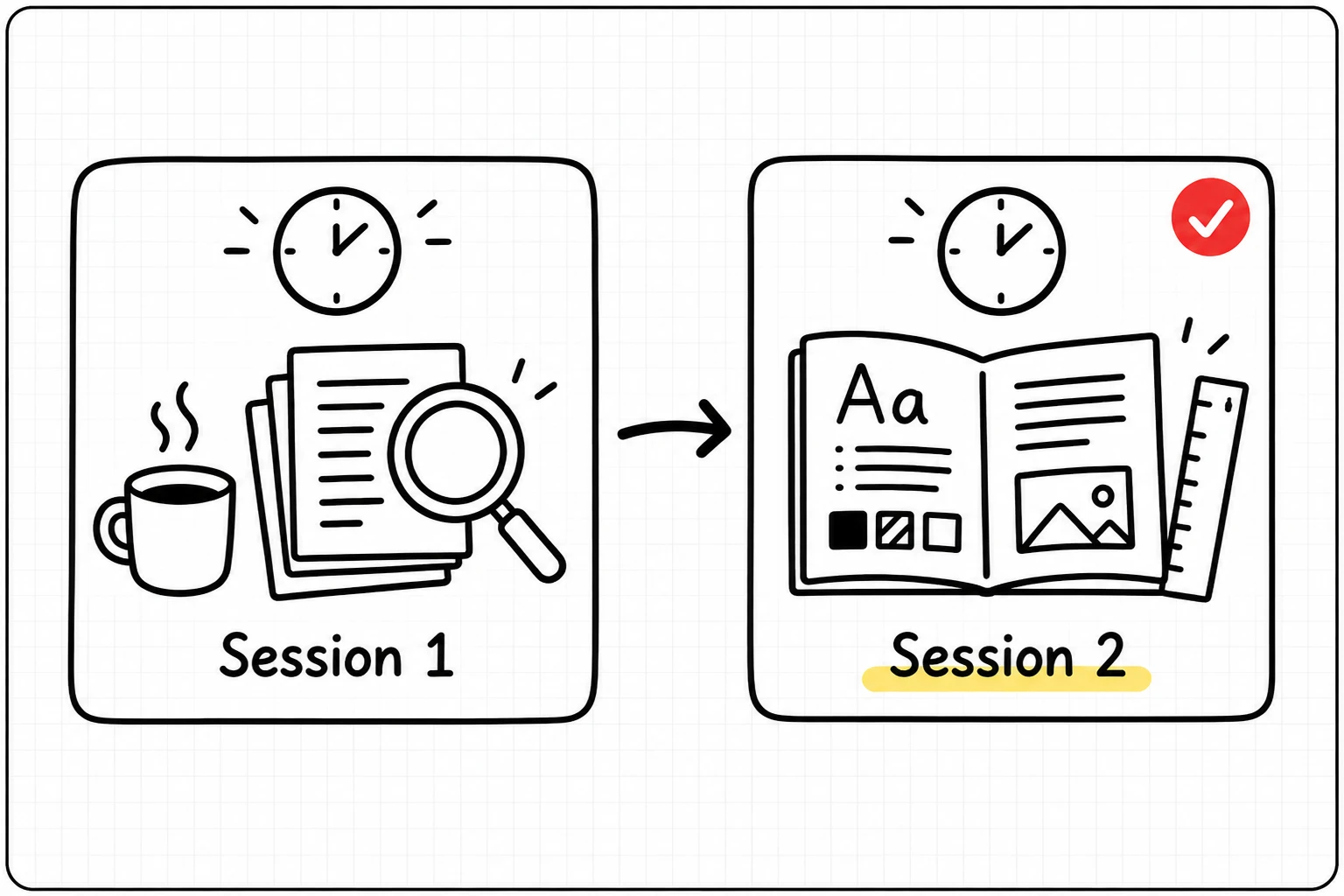
Session one: does every source exist?
Find each source.
- Copy your bibliography into a separate document.
- If an entry has a DOI, open
doi.org/{the DOI}. - If not, search the exact title in Google Scholar or your library catalogue.
- Mark it found, found but different, or not found.
"Found but different" matters most. A wrong year, journal or author initial, or a title that is almost right, usually means the entry was copied from someone else's reference list, not from the source.
Check coverage (about 20 minutes). Search your text for each bibliography surname. Do the reverse for any in-text citation you are unsure of.
Check quotations word for word, including the page number. Quotes drift during editing: a dropped "not", a tidied verb tense.
Resolve secondary citations. For "Bourdieu (1984, as cited in Schmidt, 2020)", cite Bourdieu directly if the claim matters to your argument. If not, keep the secondary form and list only Schmidt in your bibliography, as most styles require.
Session two: style and detail
Use your department's style guide, not a generic one: its local version of APA or Harvard is what you are marked against. Check the rules for your three or four most-used source types, usually journal article, book, book chapter and web page.
Then check the details style checkers miss:
- Capitalisation. APA 7 uses sentence case:
Learning analytics in higher education, not the title caseLearning Analytics in Higher Educationyou copy from most publisher sites. - Umlauts and name particles. Libraries often file
MüllerasMueller; APA files it asMuller.van Dijkgoes under V in Dutch practice and under D in APA. Pick one rule and use it for every name. - Page numbers on quotations.
(Schmidt, 2020, p. 47), not(Schmidt, 2020). - "et al." APA 7 uses it from three authors, in every citation including the first.
- Editions:
(3rd ed.)for a second or later edition. - Accessed dates on web sources, if your style requires them.
- Merged entries. Two references that ran together in a copy-paste. Split them.
When you cannot find the source
Some entries will not resolve, and this is where people panic and start deleting paragraphs. Work down this ladder instead, and stop at the first step that works.
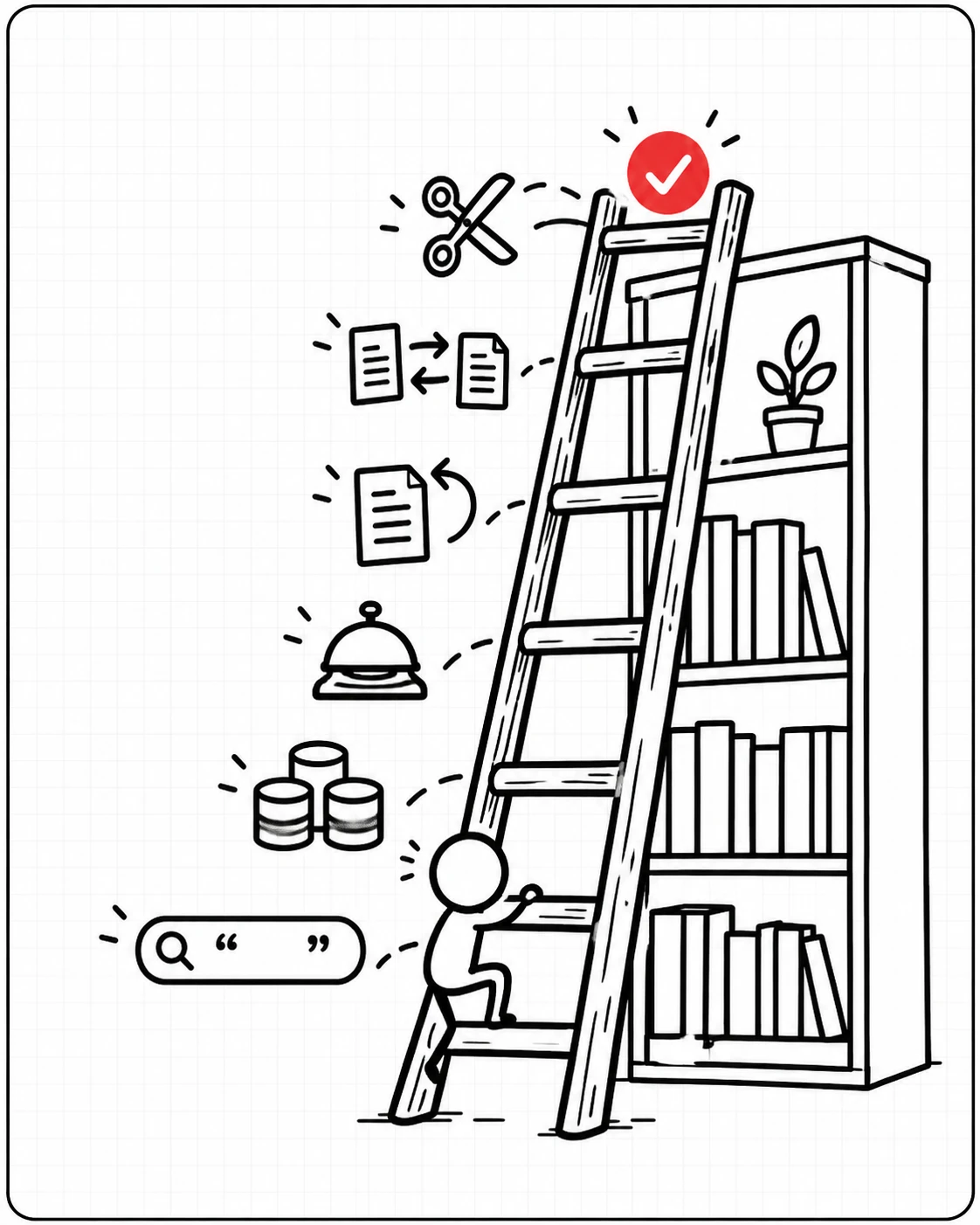
- Search the title in quotation marks, then search a distinctive phrase from the title without the author name. Typos in author initials break more searches than wrong titles do.
- Try the other databases. Google Scholar, your library's discovery service, JSTOR, and the publisher's own site do not index the same things. Older German-language monographs in particular are often in the library catalogue and nowhere else.
- Ask a subject librarian. This is the most underused resource in any university, and tracking down an ambiguous reference is exactly what they are good at. Interlibrary loan will get you the physical item, usually within a week, which is one reason not to start this the night before.
- Go back to where you found it. If the reference came from another paper's bibliography, check that paper again. You may have copied a typo, or the original may itself be wrong.
- Replace the source. If the claim is sound but this particular reference is unrecoverable, find a citable source that supports the same point. This is usually faster than restructuring the paragraph.
- Cut the claim, properly. As a last resort, remove the sentence and read the whole paragraph again. A deleted claim tends to leave a logical gap in the sentences on either side of it.
If a reference came from an AI tool and steps 1 and 2 both fail, assume it was fabricated and go straight to step 5.
Where a tool helps, and where it does not
Reference managers like Zotero, Mendeley, and Citavi are good at formatting and bad at truth. They format whatever metadata they were given, so a source with the wrong year still gets a beautifully consistent APA entry. Use them for style consistency, not verification.
PaperCheck covers the two harder passes.
Reference Health: is each entry real and right?
Reference Health looks up every entry in your bibliography against academic databases and sorts it by what you need to do next:
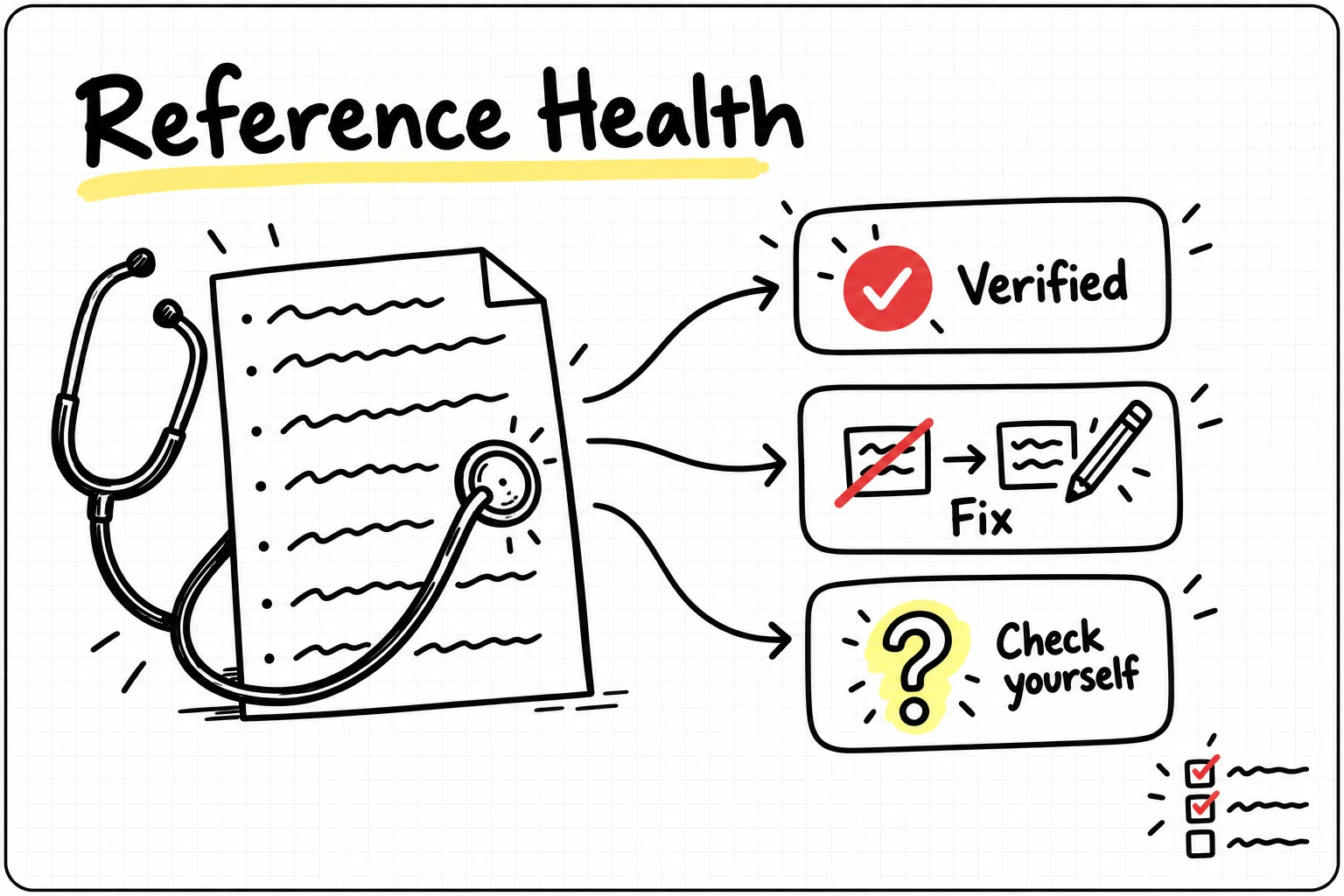
That turns an evening of manual lookups into a checklist you can work down.
"Needs correction" saves the most time, because it tells you which field is wrong. You see what you wrote side by side with the published record: the year, the title, the DOI, the journal name, or an author who is not on the record.
It also catches the structural problems you would otherwise find by eye:
- an entry missing an author or a year
- an entry formatted unlike your other entries
- two references run together as one entry
- an entry in your bibliography that is never cited in your text
Each flag comes with a suggested corrected version in your citation style, which you can copy directly or take as BibTeX into your reference manager. Treat it as a draft to check against the original, not as a finished entry.
"Not found" is a prompt, not a verdict. Some genuine sources (older German-language books, organisational reports, preprints, anything without a DOI) are hard to look up automatically, and they land in the same pile as anything fabricated. The value is that the pile is small: instead of verifying eighty references, you verify the twelve the tool could not confirm.
Two more things help you work through the flags:
- Fix Issues collects everything flagged into a checklist with a progress count, so you tick items off instead of rereading a report.
- Citation network shows which of your sources cite each other and which cited works they share. Useful for spotting a section that rests on one paper, or a name everyone in your field cites that is missing from your list.
It handles more than journal articles: books, web pages, standards, legislation, and video sources are all recognised.
Citation Style: is it consistent?
The Citation Style check runs alongside it and catches consistency problems across the document:
- mixed formats
- in-text citations with no matching entry
- citations that do not follow the style you selected at upload
Give yourself a week
The most useful thing you can do is not a tool. It is finishing your reference list a week before the deadline, not the night before.
Every error above is trivial to fix with time and painful to fix without it:
- At 2am, a source you cannot find becomes a claim you have to delete, and deleting it tends to break the paragraph around it.
- With a week, the same source becomes an interlibrary loan request.
Run your check early, work down the flagged list, and spend the last week on the argument instead.
Want your bibliography checked in one pass? Upload your thesis to PaperCheck and get every reference flagged, alongside feedback on your argumentation, structure, and citation style.