6 July 2026
How to Write Your Thesis Faster: A Realistic Time-Management Guide
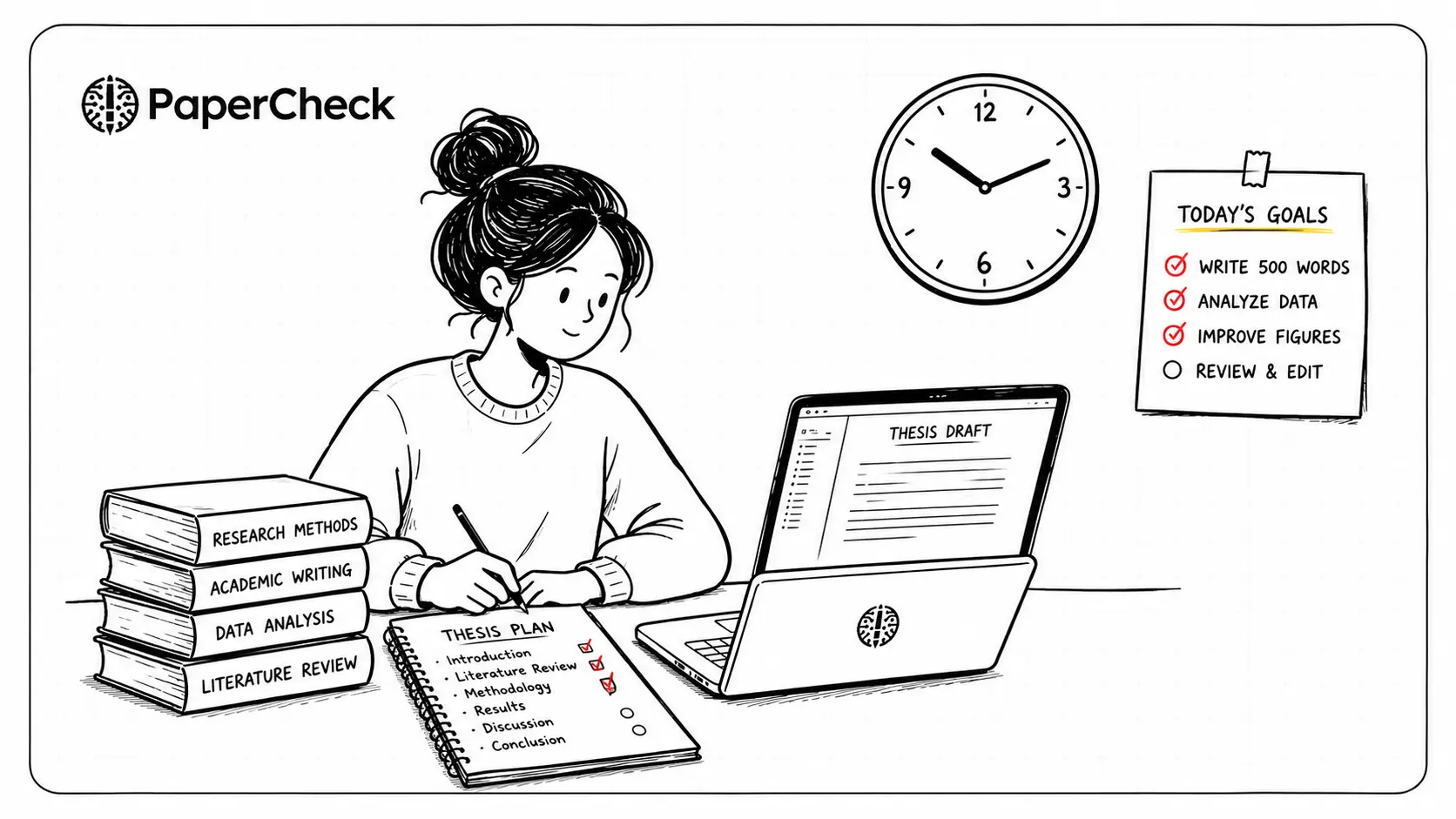
Whether you're juggling a part-time job, other coursework, or just life, writing a thesis with limited time feels overwhelming. The good news: most of the time people lose isn't in the writing itself. It goes to poor planning up front, staring at a blank page, and hours of tedious checking at the end.
This guide breaks down a realistic way to plan your thesis, protect your focus, and hand off the time-wasting tasks that quietly eat your final weeks.
Start with honest numbers
Before you build a schedule, be honest about how much real work you can do:
- A bachelor's thesis is designed for roughly 3 months full-time (40 h/week), or about 6 months at 20 h/week.
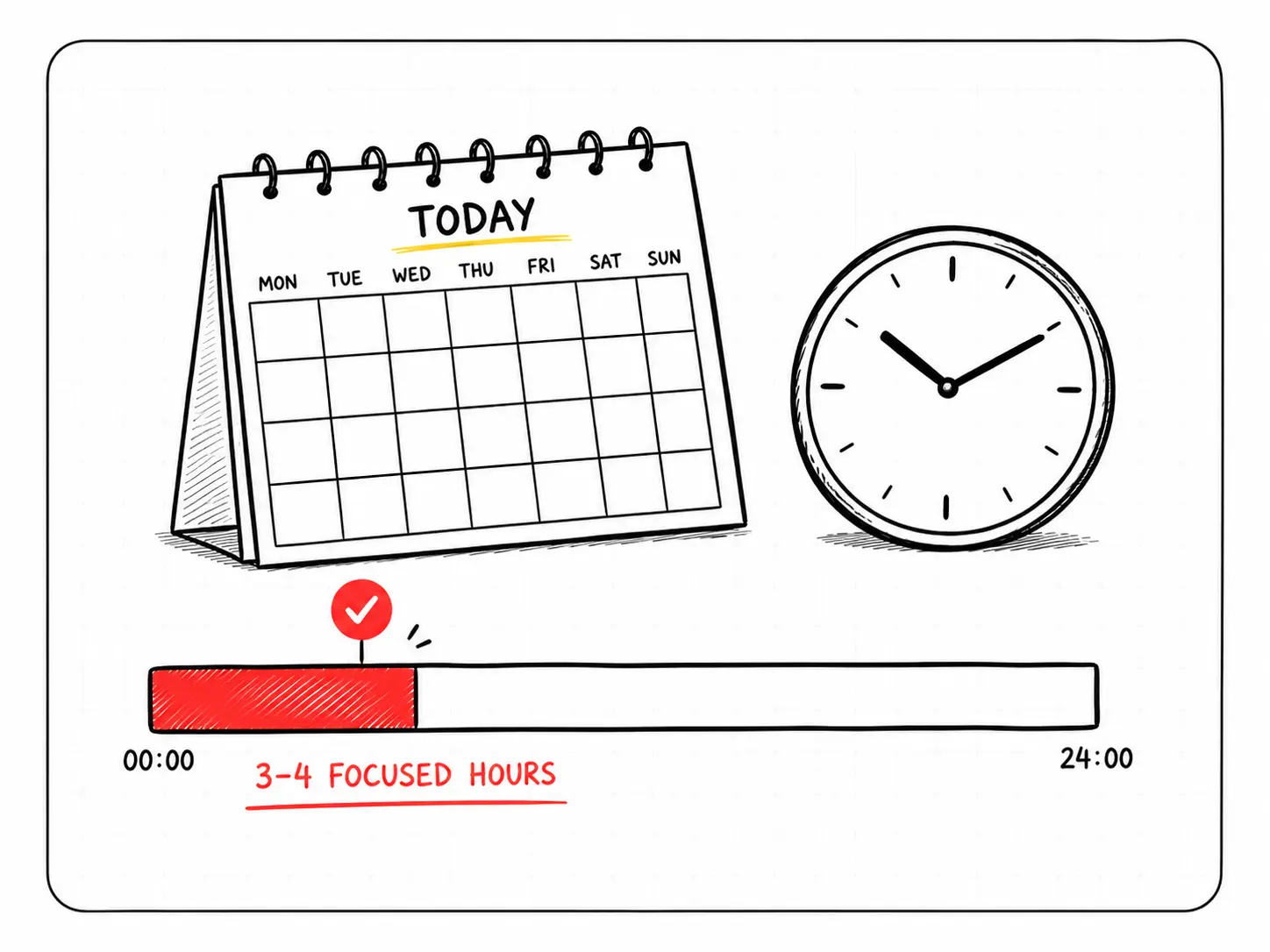
- You will not write for 8 hours a day. Realistically, you get 3 to 4 hours of focused writing in you. The rest of your "thesis time" is reading, research, and structuring.
Plan around 3 to 4 productive hours, not 8. It sounds like less, but it's the number that actually holds up, and planning around it keeps you from burning out in week two.
A simple time-management framework
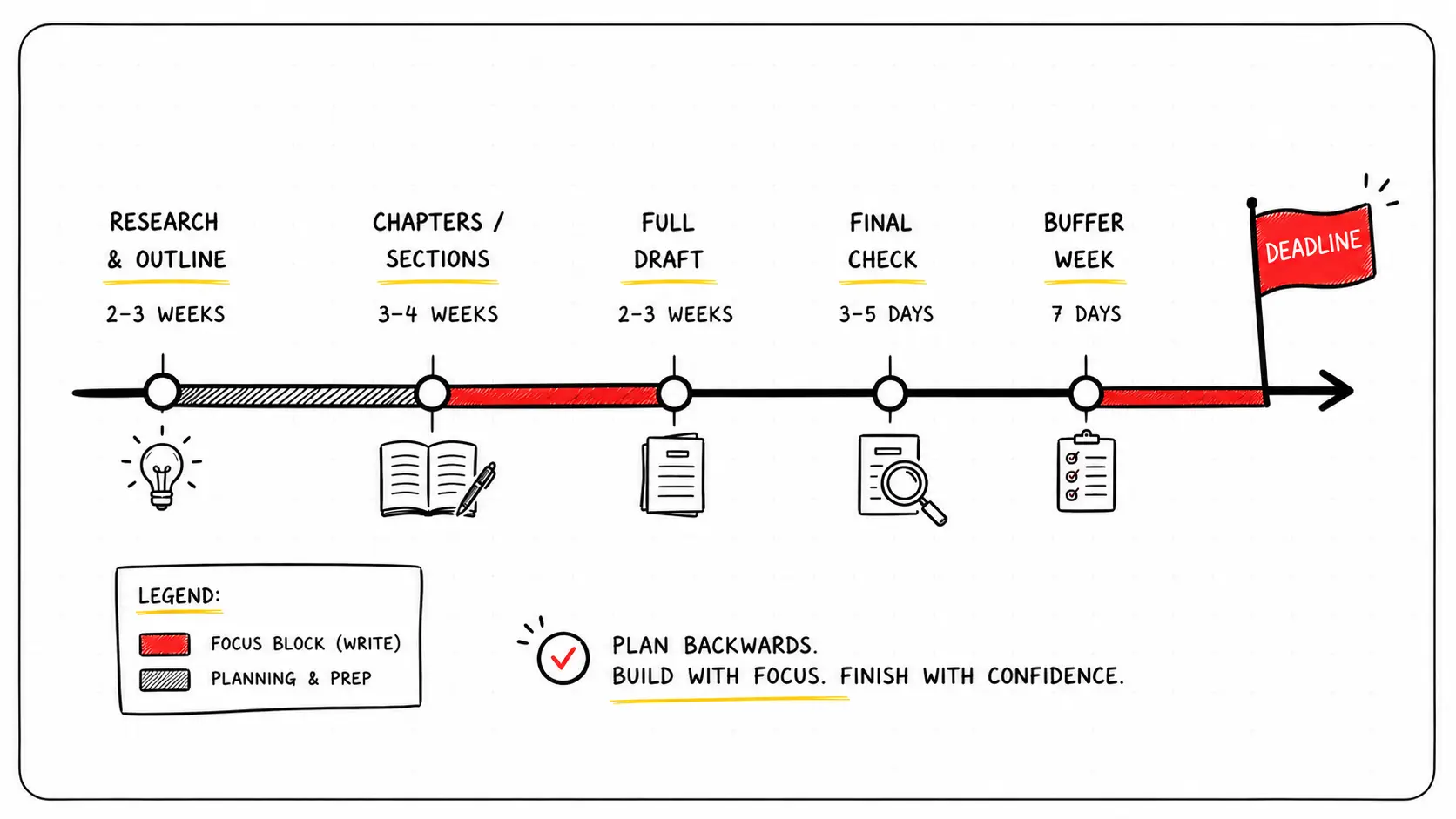
Plan backwards from the deadline. Put your submission date on a calendar, then work backwards: buffer week, final quality and source check, full draft done, chapters, research. Give your last week to polishing, not writing. Something always goes wrong at the end; the buffer is what saves you.
Block your deep-work time, don't scatter it. Two uninterrupted 3-hour blocks beat six 1-hour fragments. Reserve fixed blocks where the thesis is the only thing you touch. If you work or study alongside, batch those commitments into whole days so your free days stay whole.
Separate writing from editing. Trying to write and polish at the same time kills your speed. Draft badly and fast first: get words down. Fix, cut, and format in a separate session. Your brain is far more efficient doing one mode at a time.
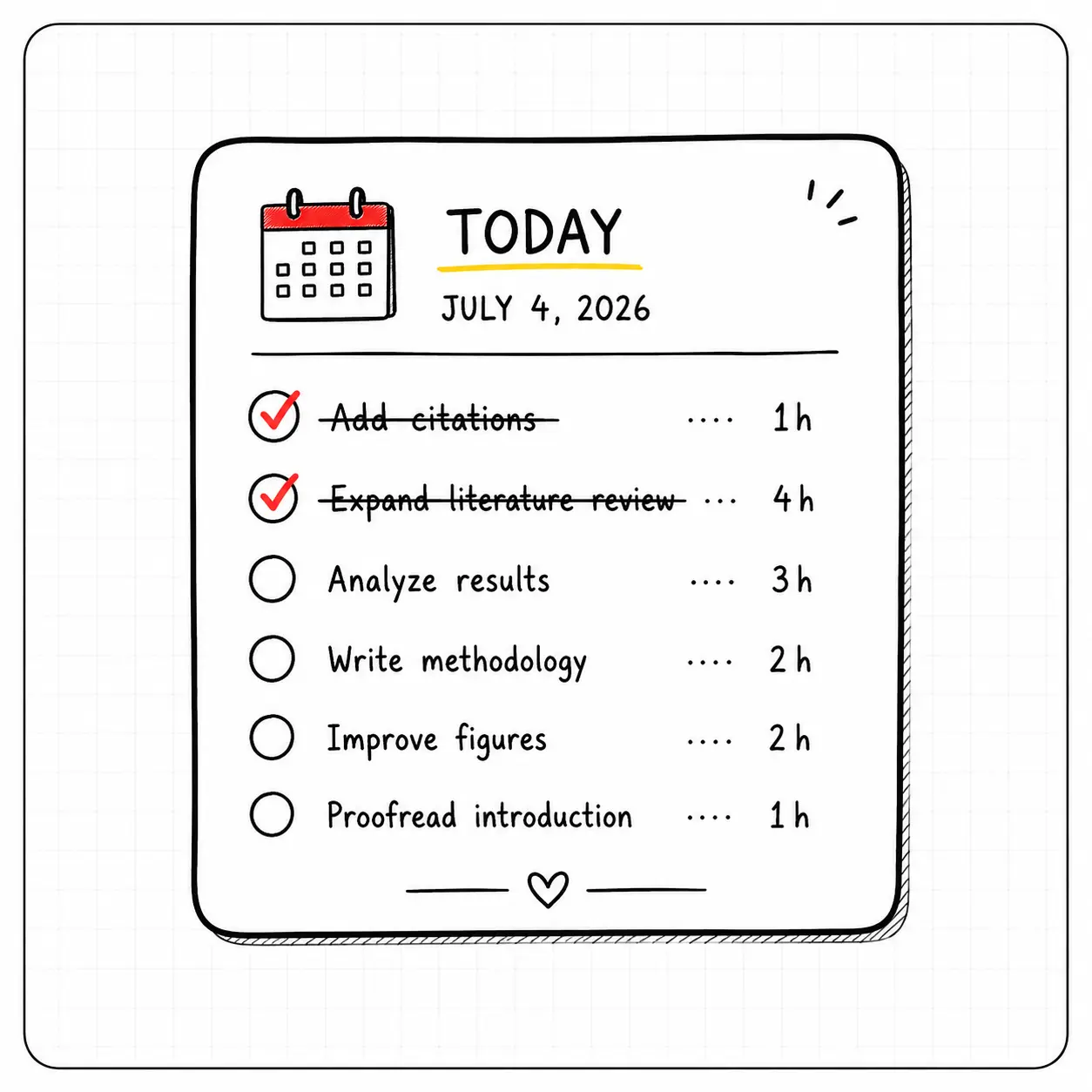
Turn a vague pile of work into concrete next steps. The most paralyzing part of a thesis is not knowing what to tackle next. Break "finish chapter 3" into small, time-estimated tasks ("add citations: 1h", "expand literature review: 4h"). A list of 30-minute jobs is something you can actually start; "write my thesis" is not.
Where PaperCheck fits into your workflow
PaperCheck is a pre-submission platform that checks your paper comprehensively and, importantly, explains what you should improve, not just what's wrong. Here's how a time-strapped student actually uses it, stage by stage.
While you draft: stop losing time to small errors
As you write, PaperCheck highlights grammar, punctuation, and spelling mistakes directly in your text, with a short explanation of each fix. Instead of a separate, mind-numbing proofreading marathon at the end, you clean up as you go.
When your draft is done: one click, a full quality review
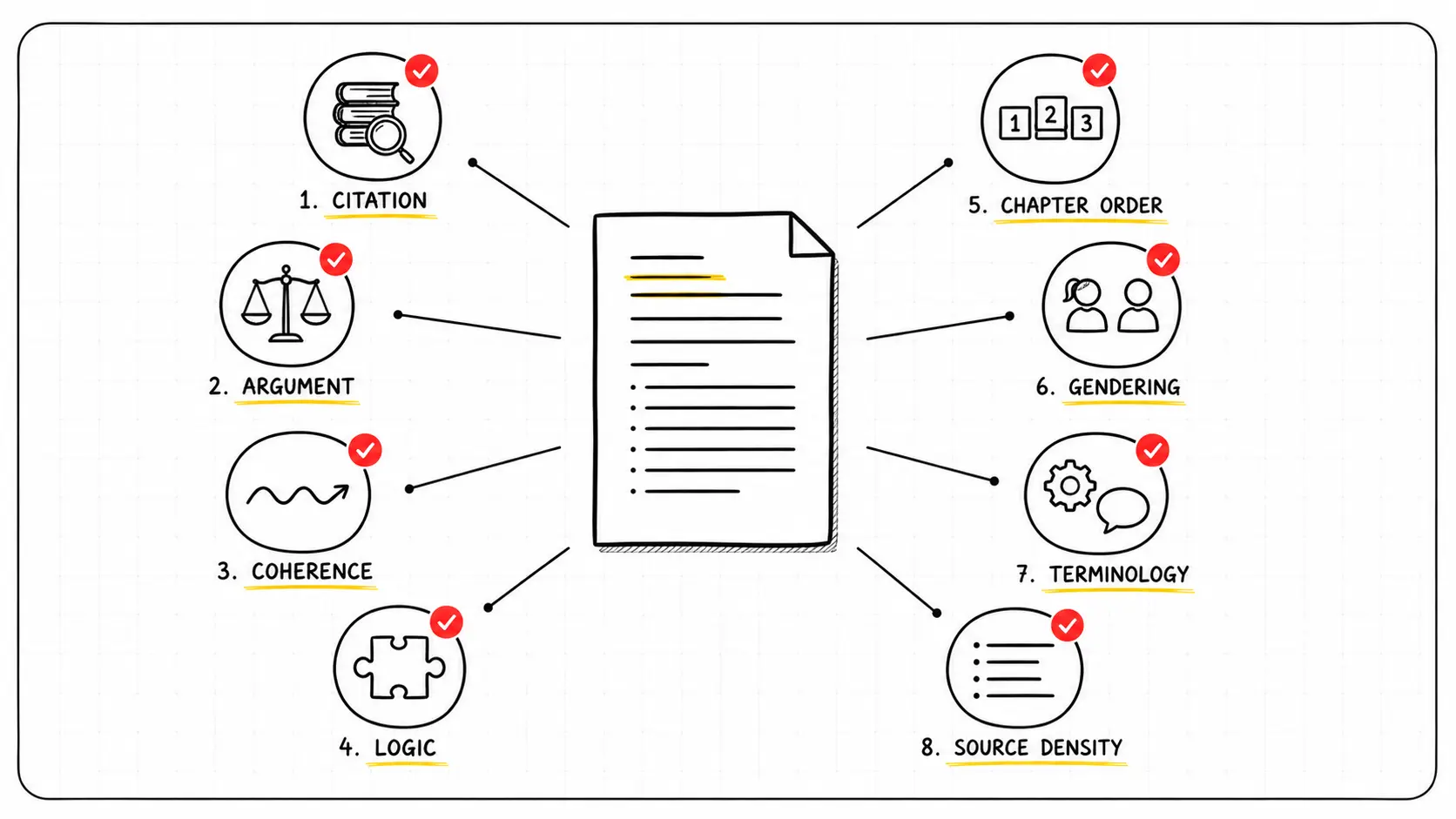
This is where the hours really add up if you do it by hand. PaperCheck runs eight checks at once and tells you what to improve:
- Citation Style: is your citation style applied consistently and correctly throughout?
- Source Density: are your sources distributed well and in the right quantity per section?
- Argumentation: is your argument logically and convincingly structured?
- Coherence: is the main thread clear and the conclusion actually conclusive?
- Logical Errors: are there contradictions or unclear points a reader would trip on?
- Chapter Order: does the sequence of chapters make sense?
- Terminology: are technical terms introduced and explained clearly?
- Gendering: is the language inclusive and gender-neutral?
For a busy student, the value isn't just "it finds mistakes". It's that it finds the structural problems (weak argument thread, sources bunched in one chapter, an illogical chapter order) that you can't see anymore after staring at your own draft for weeks.
Before you submit: protect yourself
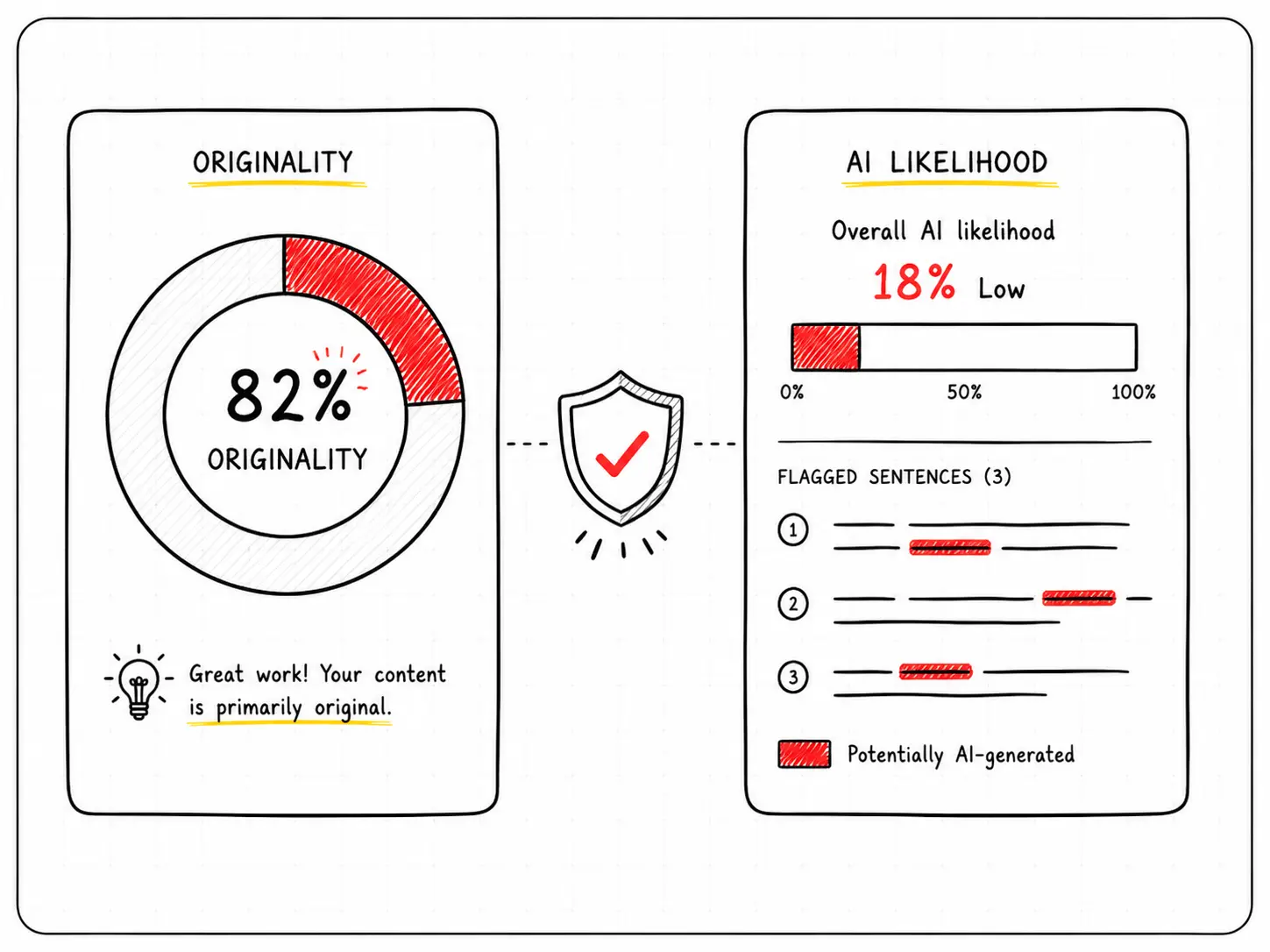
Two checks here are about peace of mind:
- Plagiarism / originality scan: PaperCheck compares your paper against billions of sources and shows an originality score, so you catch accidental overlaps before your examiner does. Your file isn't added to a public database in the process.
- AI-detection: it scores how much of your draft "reads as" AI-generated and flags each sentence by confidence (highly likely, likely, human). This matters more than it used to: examiners increasingly treat AI-sounding phrasing as a red flag. Reviewing and rephrasing the flagged sentences yourself is a simple way to avoid a false accusation over writing you did honestly. (AI-detection currently works for English papers only.)
Your quick pre-submission checklist
- Full draft done with a buffer week left before the deadline
- Grammar, punctuation, spelling cleaned up (fix as you write)
- Ran PaperCheck's quality review: citation style, argumentation, coherence, chapter order, source density, terminology all addressed
- Originality scan clean, no accidental overlaps
- AI-detection reviewed, rephrased anything flagged
In short
- Plan around 3 to 4 hours of real writing per day, not 8.
- Work backwards from the deadline and leave a buffer week.
- Block deep-work time; separate writing from editing.
- Turn "write my thesis" into a list of small, timed tasks, so you always know your next move.
- Let PaperCheck handle the tedious, high-stakes checks (grammar, an 8-point quality review, plagiarism, and AI-detection) and spend your limited hours on the ideas that actually earn the grade.
Short on time? Spend it where it counts, and let the checking take care of itself.