2 July 2026
The Paper That Was "Published" Before It Existed
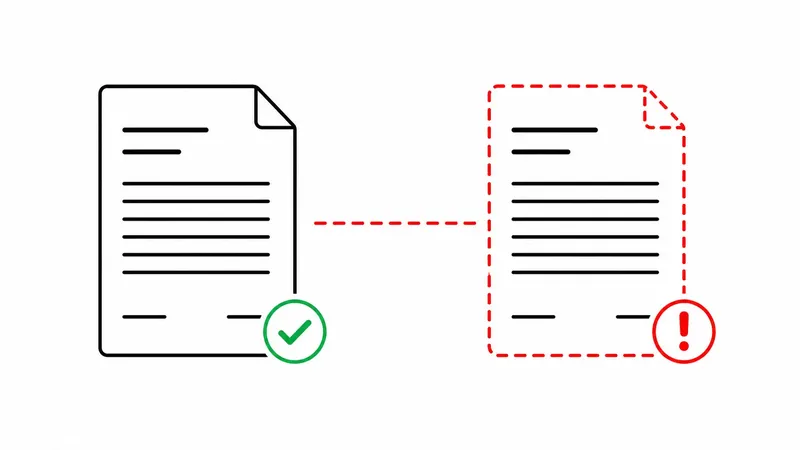
A few weeks ago, a researcher made a strange discovery. Their own paper, published, peer-reviewed, the final version after months of revisions, showed up again. Same findings. Same structure. Same arguments, just reworded. Different authors. Different institution. Different journal.
And according to that journal, it had been published a full year before the original.
A paper with no past
At first glance, it looked like the obvious story: someone had copied a paper and tried to pass it off as their own. But a few details didn't add up.
The "new" paper carried an ethics approval number, the exact same one as the original. The institution listed wasn't just similar to the real one, it was the real one, copy-pasted into a paper its actual researchers had never seen. And the authors? Searchable nowhere. No profiles, no other papers, no trace. Except, oddly, on Google Scholar, where they already had citations.
That last detail is the one worth sitting with. Fake authors, with a citation history, attached to a journal that didn't exist a few searches ago.
Working backwards
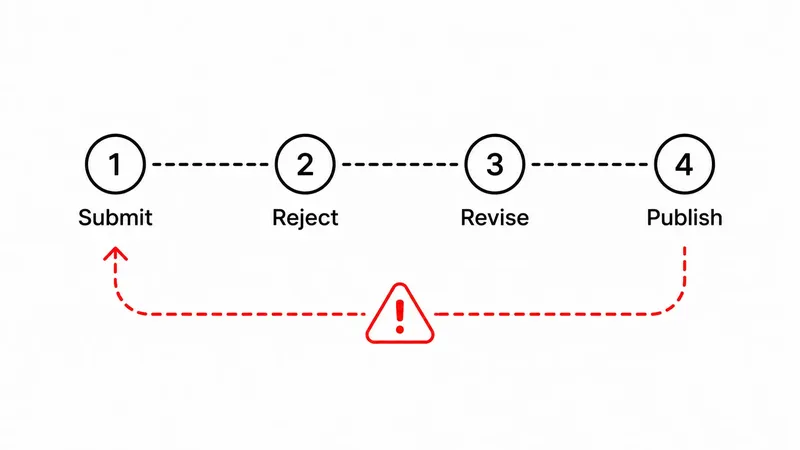
The timeline only made sense once it was reversed.
The real paper had been submitted to one journal, rejected, revised, resubmitted elsewhere, revised again based on reviewer comments, and finally published on Christmas Eve. A long, ordinary, unremarkable journey, the kind every researcher recognizes.
The copy used the post-revision version, the polished one that only existed after that whole process. Yet it claimed a publication date that came before the original paper had even been submitted for the first time. The copy, in other words, was citing a future it couldn't have known about.
The giveaway, when someone finally looked closely: the copied paper referenced sources from a year after its own claimed publication date. A paper cannot cite something that doesn't exist yet.
How it was found
Not through any system designed to catch this. A different researcher, reviewing literature on a related topic, happened to read both papers within the same week and recognized the second one, almost word for word, as something they'd already read.
That's it. No alert, no algorithm, no automatic check. Just a coincidence of two papers landing in front of the same person.
(We're withholding the names of the journals, authors, and institutions involved while the matter is still being reviewed by the original journal's editor.)
Not the first time, in this field
This particular story is unusual, but the broader phenomenon isn't new. While this case involves what looks like a cloned and backdated article, it emerged within an ecosystem already known to be vulnerable to predatory publishing practices, and palliative care researchers have been documenting that ecosystem for years. A 2018 letter in the Journal of Pain and Symptom Management analyzed dozens of open-access palliative care journals and found that many reported false indexing in databases like PubMed, Scopus, Google Scholar, and DOAJ. These are credentials that, on paper, are meant to signal legitimacy.
In other words: researchers in this exact field have already mapped out how thin the line can be between a journal that looks legitimate and one that isn't. This case is simply a newer, sharper version of a problem the literature already saw coming.
What this is actually about
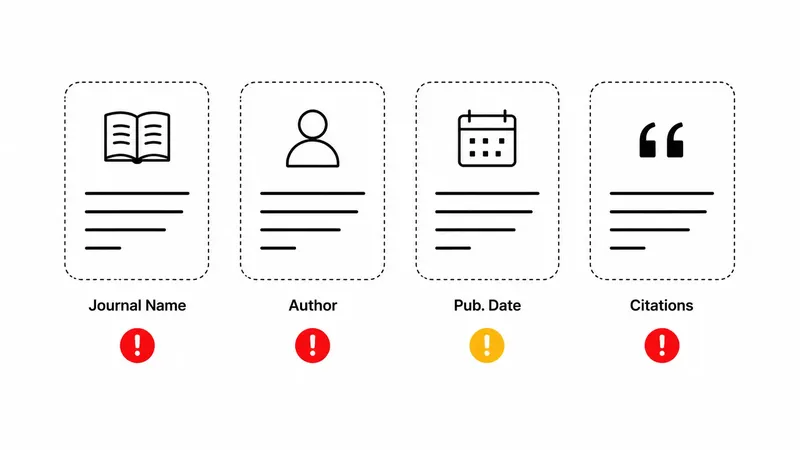
It would be easy to read this as a story about one bad journal. But the more interesting question is the one underneath: how much of what we trust in academic publishing (a journal's name, an author's affiliation, a publication date, a citation count) is actually verifiable, versus simply assumed?
Most of the time, the assumption holds. Journals are what they claim to be, dates are accurate, authors exist. But "most of the time" is precisely the gap that something like this lives in, quietly, for as long as nobody happens to look.
The story doesn't have a tidy resolution yet. The original authors have flagged it with their journal's editor, who's now looking into it. Other researchers in the same field have been asked to check whether their own work shows up somewhere it shouldn't.
Sometimes the most useful thing a strange story can do isn't offer a solution. It's make you look a little closer at something you'd otherwise never have thought to check.
References
- Cortegiani A, et al. "Predatory Open-Access Publishing in Palliative and Supportive Care." Journal of Pain and Symptom Management, 2019. Read the article